30 years of media technology in Ilmenau – and an industry that is changing at a rapid pace. Former students returned to TU Ilmenau and Fraunhofer IDMT for the alumni symposium on October 1 and 2. The two-day event, organized jointly by the two institutions, focused on reunions and exchanges, but above all on the question of how media technology, the professional world, and education are changing – and what this means for education in media engineering.
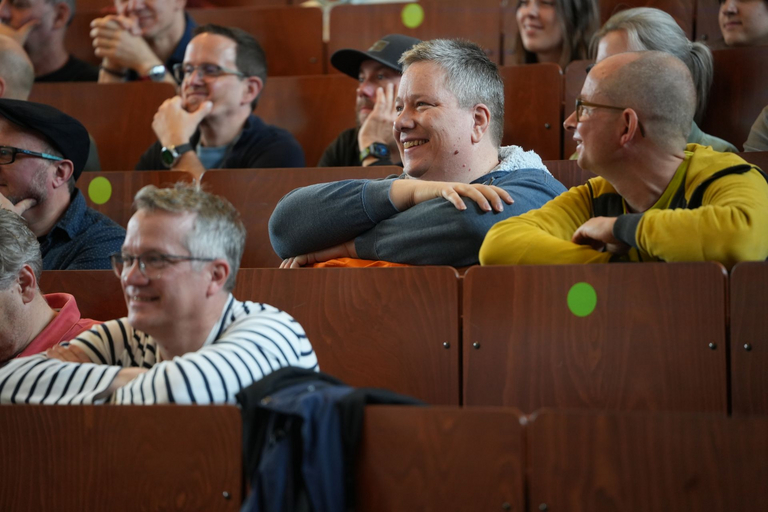
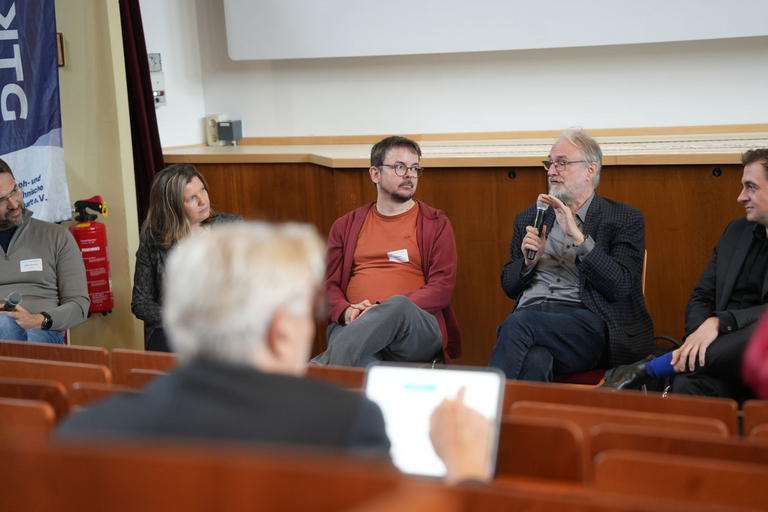
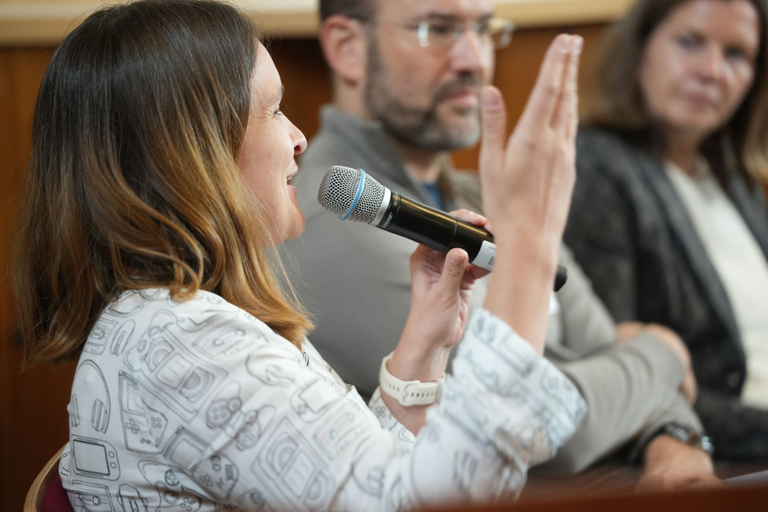
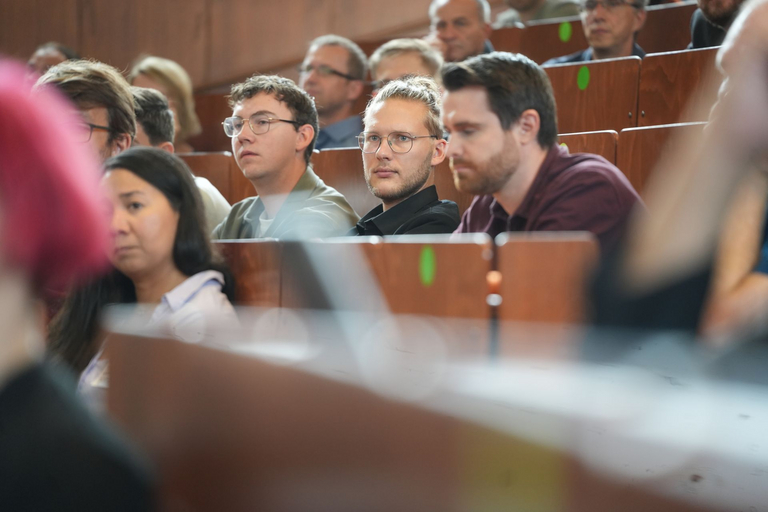
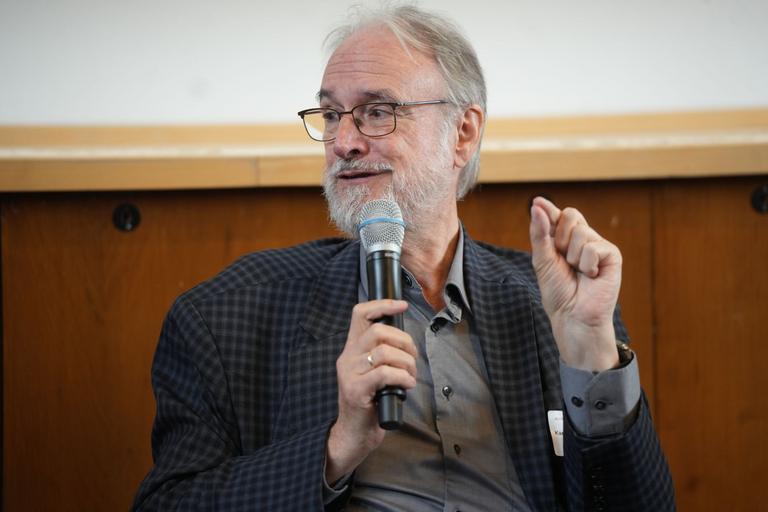
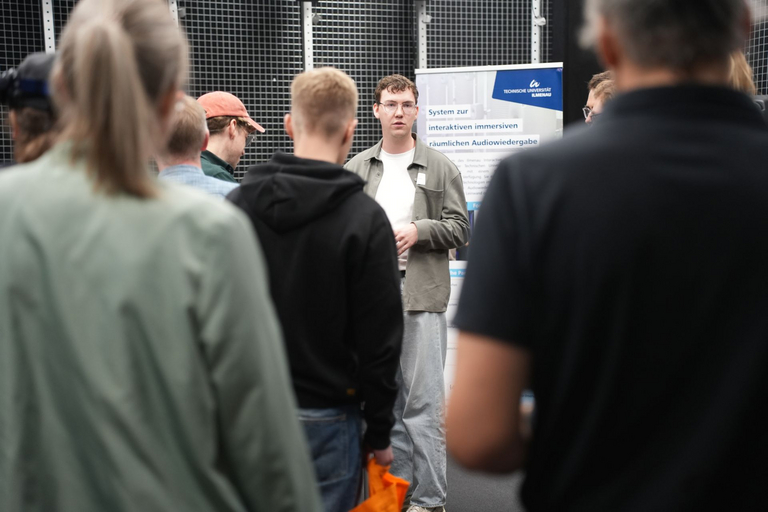
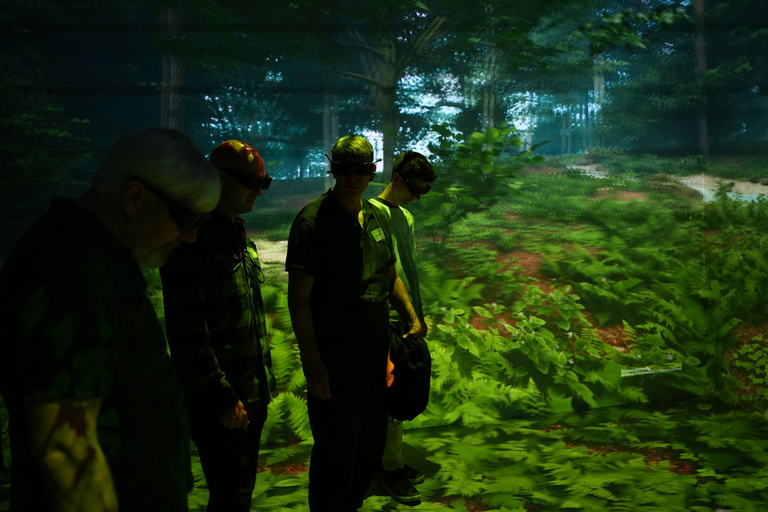
Through workshops, lab tours at TU Ilmenau, technology demonstrations at Fraunhofer IDMT, company visits, and a panel discussion on “Media Technology: Yesterday, Today, Tomorrow,” former students, scientists, and other guests shared their diverse perspectives.
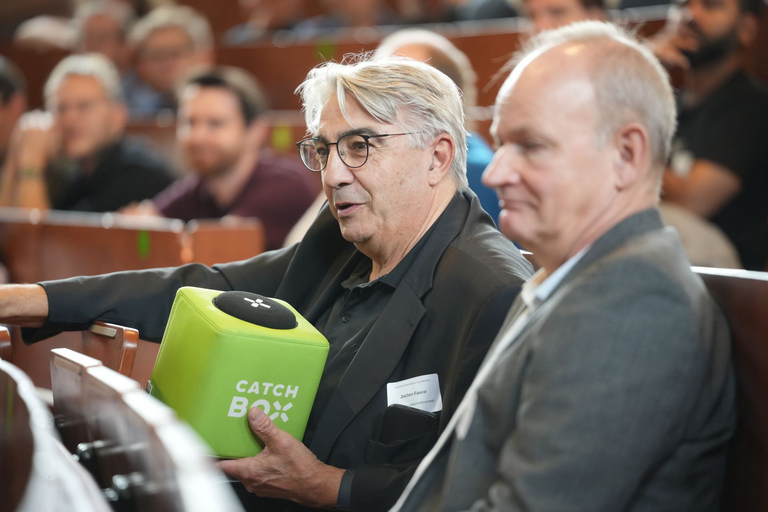
The panel brought together the experiences of former students of the university who now work in international media companies across various industries, as well as in research and higher education. The discussion, moderated by alumna Christiane Janusch, a business unit manager at ZDF and a member of the FKTG board, focused not only on reminiscing about their own student experiences but, above all, on the question: What must a university teach today to ensure that its graduates will be successful tomorrow?
Broad Education and Systems Thinking
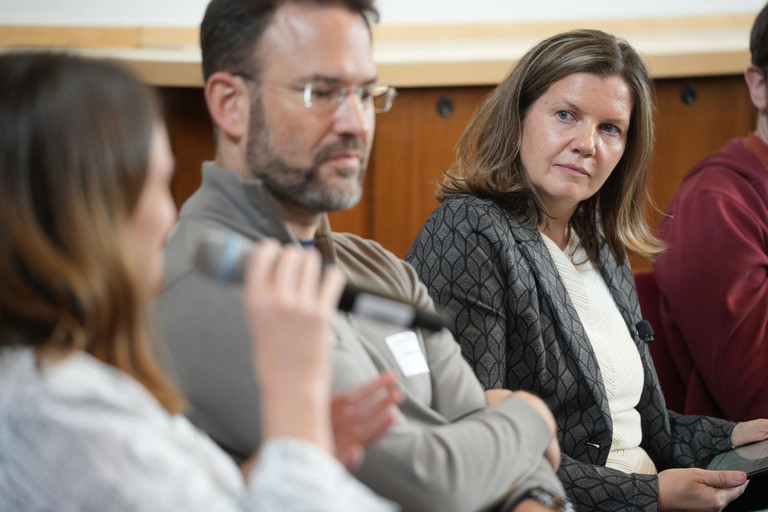
One person who knows both sides is Christoph Fingerhut. After completing his studies and working at TU Ilmenau and Fraunhofer IDMT, his career path took him to the BBC, among other places. Today, he works at Samsung Research as Head of TV Standards & Services.
When he looks back on his college days, he recognizes one constant despite all the technological changes: “The specific technologies have certainly changed, but much of what we learned here in this room is still very, very relevant.” Fingerhut particularly emphasizes the interdisciplinary approach and systems thinking. Equally important, he says, was the opportunity to try things out for himself.
Fabian Dorschel, Global Head of Media Technology & IT at RedBull Media House, also sees the broad-based education as a decisive advantage:
What really helped me was having such a broad foundation.
A broad understanding of workflows, platforms, and interrelationships makes it possible to familiarize oneself with new topics later on, he emphasized – a skill that is becoming increasingly important in light of technological change.
AI is changing work – but not responsibility
The panel engaged in a particularly intense discussion of how artificial intelligence is changing higher education and the professional world – and, with it, our perspective on the technology itself.
According to Prof. Anna Kruspe, professor of AI systems at Munich University of Applied Sciences, it is no longer just about building ever more powerful systems. Rather, she emphasized, we must also consider the goals and consequences: “What are we actually doing with AI? And what do we want to achieve with it?”
André Gray, a staff software engineer at Google, therefore continues to see a central role for universities in imparting foundational knowledge: “Ultimately, a person must be able to determine: Is this right or wrong?”
From Discussion to Workshops
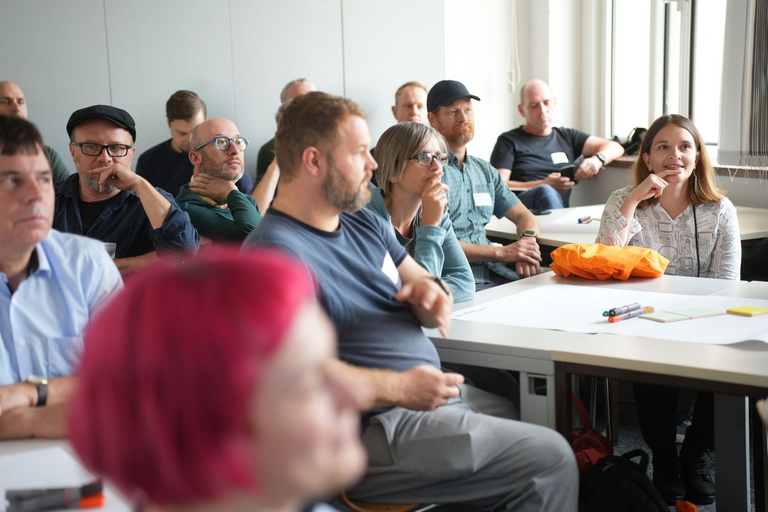
These questions were also addressed in workshops as well as in the keynote speech by Ulrich Liebenow and Volker Frank, Operations Director and Head of Media Production at MDR, the regional TV station: Which technologies will be relevant in the future? How will they change the world of work? And what skills do students need to develop to prepare for this? Discussions focused on modern educational concepts, software-defined media technology, AI tools and their impact on job profiles, IP-based media technologies, as well as metaverse and immersive technologies. The workshop findings were subsequently consolidated, providing impetus for the further development of teaching and research at TU Ilmenau.
One topic that came up repeatedly – and which, in Fabian Dorschel’s view, should be given greater consideration in education – is the ability to cope with change: “It feels like everything we tackle these days is some kind of change project.” As part of an iterative approach, he added, it might make more sense, to start with what creates the most value.
Not everything has to be perfect
Christoph Fingerhut also emphasized that theory and practical experience go hand in hand, reflecting on his own time as a student. He particularly recalls student projects such as the student radio HSF and the student TV iSTUFF: “The best theorists are of no use to us if they can’t do anything in practice.”
Students should not only absorb knowledge but also try things out, work with others, and build networks. At the same time, in his view, business administration, law, and social science content are gaining in importance – for example, in the field of media policy. The combination of different perspectives, in particular, was a strength of the Ilmenau program, he added:
“I think graduates from Ilmenau have always brought this interdisciplinary perspective with them, and that’s certainly what helps me the most.”
Prof. Karlheinz Brandenburg, co-inventor of MP3 and founder and CEO of Brandenburg Labs, also looked at the development of media technology from an international perspective:
With Brandenburg Labs, we’re continuing the tradition of Ilmenau producing technology that’s used worldwide.
Teamwork, in particular, was a strength of the German and Ilmenau environments, he said. At the same time, however, German engineering culture would have to continue to evolve: Not every problem needed to be solved down to the last detail if a more pragmatic solution already could deliver a significant portion of the benefit.
What Companies Will Need in the Future
The discussion on selection criteria in the professional world illustrated what this means specifically for graduates.
For Fabian Dorschel, creativity and curiosity are among the most important qualities. When reviewing applications, his company relied, among other things, on case studies to see how candidates approach unfamiliar problems, he explained. It wasn't just the final solution that mattered. Rather, it was about whether someone was willing and able to approach problem-solving creatively.
André Gray also emphasized that today, complex products and systems could hardly be fully grasped by any single individual. The ability to collaborate therefore remained important.
30 Years of Experience – and Looking Ahead
What must remain the same, and what must change, so that media technology education in Ilmenau continues to prepare people for a changing professional world in the future? The symposium’s response to this initial question took the form not so much of a concrete list of new course content as a call for a mindset: remain open-minded, understand interconnections, experiment, question critically, and develop solutions collaboratively.
Or, as Christoph Fingerhut put it, reflecting on his own time as a student and his early work experiences at TU Ilmenau and Fraunhofer IDMT:
Much of what is needed today was already present in Ilmenau from the very beginning. The Ilmenau approach is quite unique: in addition to an excellent engineering education, it also provides an understanding of business administration, law, and regulatory matters. There aren’t many people who have this combination of qualifikations – and that’s exactly what continues to help me in my day-to-day professional life today.”
Impressions