How can research help make more efficient use of resources and address specific societal challenges in the countries of the Global South, particularly on the African continent? This was the focus of a five-year international research project.
Researchers from the Technische Universität Ilmenau, the African Institute for Mathematical Sciences (AIMS), and other partners collaborated to develop scientific approaches and technical solutions, such as smarter microgrids, a more efficient water supply, and methods for storing agricultural products with fewer losses. The focus was on building scientific expertise and training highly qualified professionals.
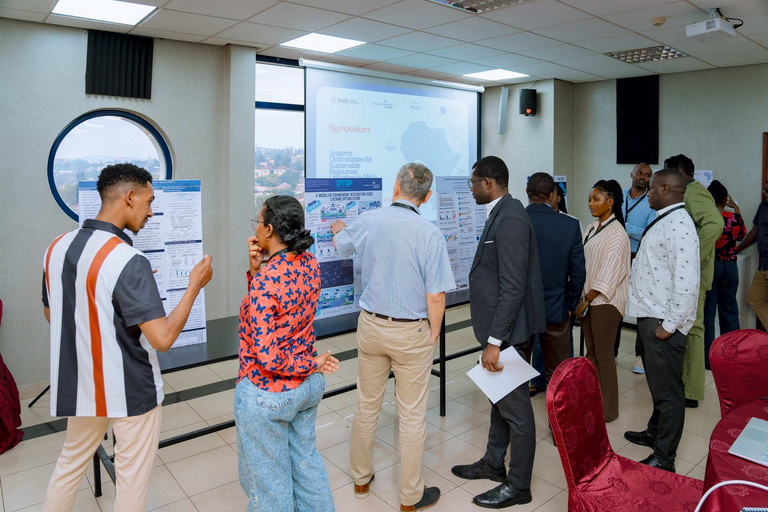
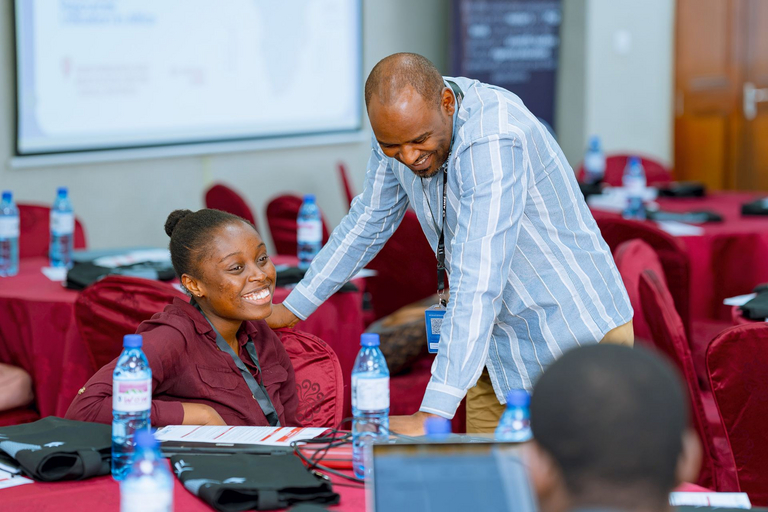
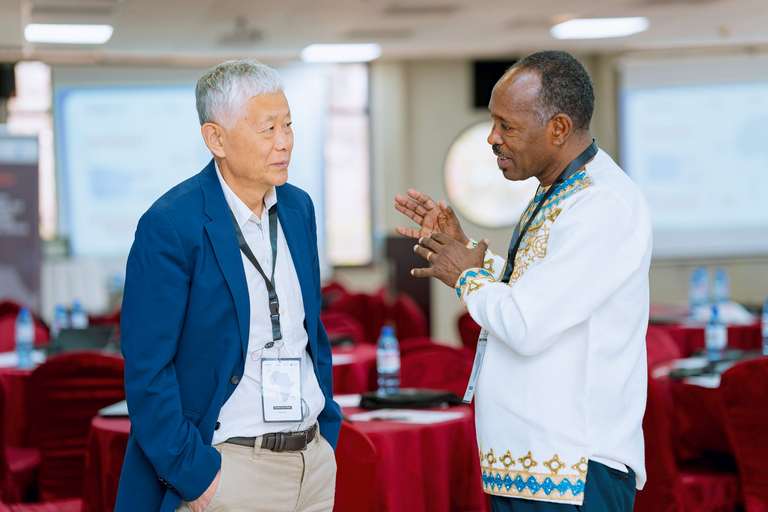
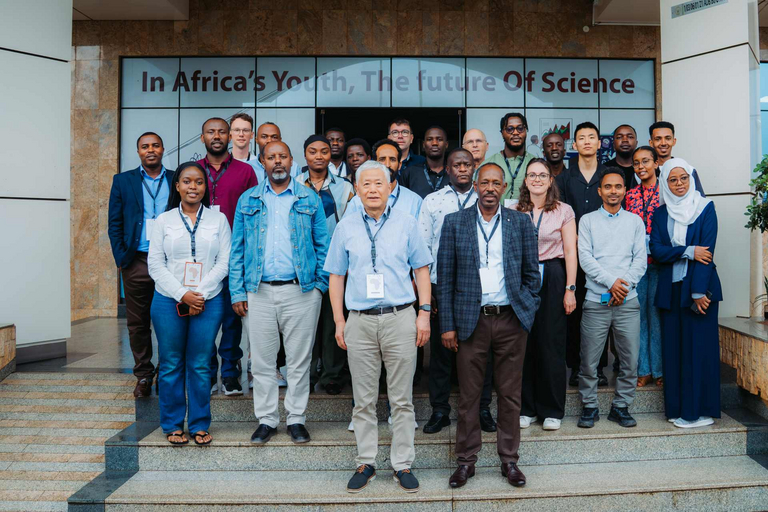
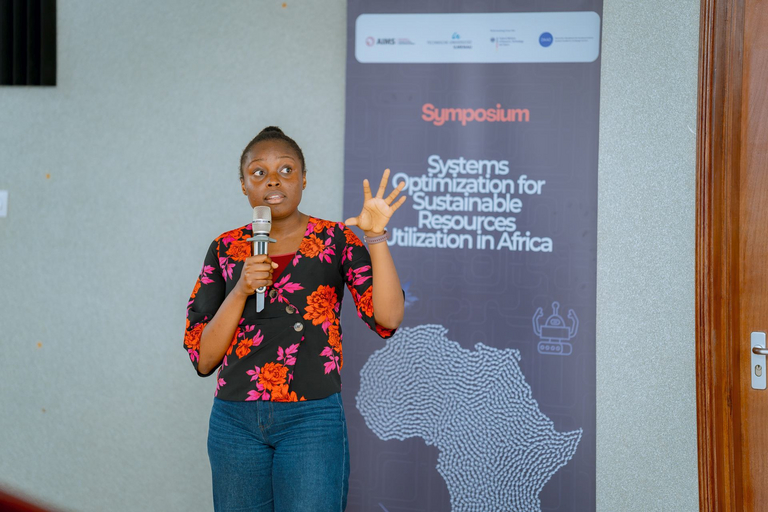
With a three-day closing event in Kigali, the DAAD project “Systems Optimization for Sustainable Resources Utilization” has entered its final phase. From September 22 to 24, 2026, researchers, early-career scientists, representatives from politics and industry, and partner institutions came together to present research findings and discuss how scientific insights can be translated into concrete solutions for Africa’s sustainable development. The project was funded by the German Academic Exchange Service (DAAD) and the Federal Ministry of Research, Technology, and Space (BMFTR).
At the opening, Prof. Wilfred Ndifon, President of the AIMS Research and Innovation Center and Chief Scientific Officer of the AIMS Network, emphasized the importance of local initiatives for Africa’s development. The African Institute for Mathematical Sciences (AIMS) has already trained approximately 4,000 students and closely integrates teaching and research with local systems, industry, and government institutions. Science must contribute to solving concrete societal challenges. At the same time, Ndifon called for further expansion of collaboration and mentoring for early-career researchers.
Translating Excellent Research into Measurable Social Impact
Pascal Gatabazi, Chief Technical Advisor at the Rwandan Ministry of Education, also praised the research conducted as part of the project and thanked the DAAD and the BMFTR for their financial support. In light of key challenges in the fields of agriculture, renewable energy, and water supply, he noted that it is crucial to better understand complex systems and use resources in a more targeted manner. The central question, he said, is how to translate excellent research into measurable societal impact.
The scientific diversity of the project was also reflected in the keynote presentations. For example, Prof. Patrick Mäder from the TU Ilmenau spoke on “AI-powered Plant Phenotyping and Genetic Association,” highlighting potential applications of artificial intelligence in plant research. Prof. Avi Ostfeld from the Technion – Israel Institute of Technology in Haifa addressed the challenges facing water supply systems. The renowned water researcher has been working for many years on optimizing and ensuring the robust operation of such systems.
In addition, doctoral candidates and postdocs presented research on autonomous mobility, smart agriculture, water distribution, energy supply, text-to-speech systems, and the optimization of agricultural product storage. The projects demonstrated how mathematical modeling, artificial intelligence, and control engineering can be used to address specific on-site challenges.
Two of the doctoral candidates funded as part of the project are expected to complete their doctorates in the coming months. Thus, the project not only contributes to the development of concrete solutions but also makes a lasting contribution to building scientific expertise and training highly qualified specialists.
In his presentation, Prof. Pu Li, project leader and co-chair of the event, looked back on the five-year collaboration between AIMS, the TU Ilmenau, and the DAAD. He praised the achievements of the participating researchers and emphasized that the partnership had made a significant contribution to translating scientific research into concrete applications for African communities.
Dr. rer. nat. habil. Abebe Geletu, German Research Chair at AIMS Rwanda and Chair of the event, underscored this point by saying, “If research doesn’t change the life of society, then that research is lost into folders.” He pointed out that it is not merely the availability of resources that is decisive, but above all the way in which they are processed and utilized.
Reducing Post-Harvest Quality Loss in Agricultural Products
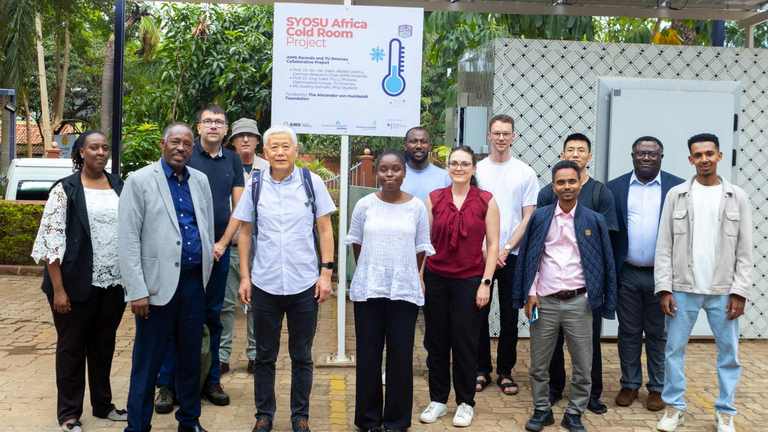
On the final day of the event, the practical application of the research became particularly clear: Participants visited the company Zipline Rwanda and gained insights into the use of autonomous drones for delivering medications and vaccines. On the AIMS Rwanda campus, they also toured a newly installed cold storage prototype developed by PhD student Audrey Demafo in collaboration with the TU Ilmenau, the Alexander von Humboldt Foundation, and the BMFTR. The goal of the research is to reduce the loss of quality in agricultural products after harvest.
The closing event thus highlighted how mathematical optimization, artificial intelligence, and control engineering can generate concrete solutions to societal challenges. Prof. Pu Li summarized:
We hope that the close collaboration between AIMS Rwanda and the TU Ilmenau, established through this project, can continue beyond the project’s conclusion and contribute to the development of sustainable technologies, scientific expertise, and innovative solutions for Africa’s future.