

What does a building sound like? And what do its vibrations reveal about its condition? Students from various universities and disciplines in Thuringia explored these unusual questions at the “STRUCTURAL ECHOES” Science Camp, held from September 24 to October 2 at the Technische Universität Ilmenau and the Bauhaus-University Weimar.


“The Allianz THÜRING Science Camps bring together people from diverse backgrounds, with varied experiences and perspectives – and that is precisely where the opportunity lies for fruitful dialogues, new ideas, lasting inspiration, and long-term connections that extend far beyond this week,” explained Prof. Anja Geigenmüller, Vice President for Academic Affairs, at the opening of the 5th ProTELC Summer Science Camp.
The goal of the camp was to combine technical and creative approaches, strengthen collaboration across disciplinary and institutional boundaries, and jointly explore new paths – in an interdisciplinary and international manner, and deliberately stepping outside one’s comfort zone, said Prof. Lars Abrahamczyk from the Faculty of Civil and Environmental Engineering at the Bauhaus-University Weimar.
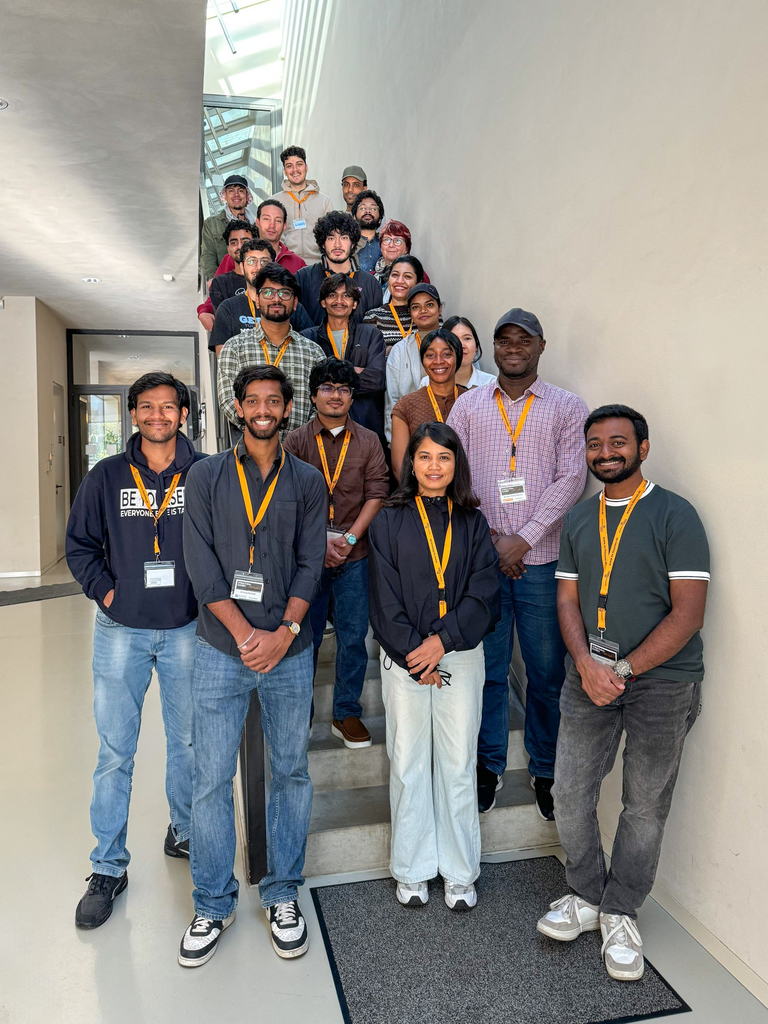
A total of 23 master’s students from four universities in Thuringia participated in the camp: Students from the Technical University of Ilmenau, the Bauhaus University Weimar, Schmalkalden University of Applied Sciences, and the EAH Jena, representing a wide variety of degree programs such as Civil Engineering, Digital Engineering, Natural Hazards and Risk in Structural Engineering, Computer Science, Mechatronics & Robotics, Scientific Instrumentation, and Data Science.
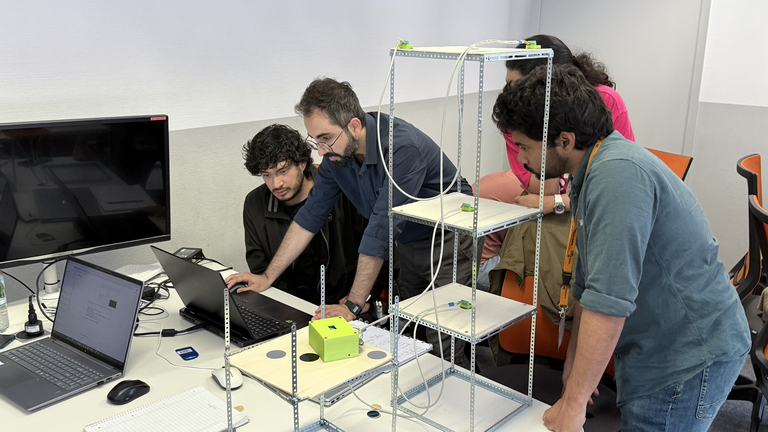
Working in interdisciplinary teams, they built small model structures and equipped them with modern measurement technology. Accelerometers and fiber-optic sensors made even the smallest movements measurable. The models were then subjected to controlled vibrations on a shake table, and the resulting oscillations were analyzed.
Combining theory and practice
The students in Ilmenau and Weimar got hands-on: Instead of using off-the-shelf sensors, they built the fiber-optic sensors from a single piece of optical fiber. They then used these sensors on various test setups assembled in Weimar, both as displacement sensors and as torsion sensors. In doing so, they utilized the Ilmenau-based open-source interferometer evaluation system, OpenRRI. In Weimar, the students combined the fiber-optic sensor with the measurement system provided by the Bauhaus University Weimar – which the students were responsible for installing – in order to compare the measurement responses.

“This combination of theory and practice is particularly exciting to me – that is, understanding how sensor technology and data analysis actually work and how to apply them in my own projects,” says Daniel, a master’s student in Mechatronics & Robotics at Schmalkalden University of Applied Sciences.
Charan, a master’s student in Data Science at the TU Ilmenau, also used the camp to deepen his practical knowledge. As a student assistant in the university’s FabLab, he had already worked with sensors and now wanted to gain further experience.
We’re having a lot of fun here and learning a great deal. And that’s also one reason why I chose the TU Ilmenau: You get to interact directly with the professors in a personal atmosphere – the program doesn’t feel anonymous, but almost like home.
The measurement data that Daniel and Charan collected in Ilmenau and Weimar were used to create visualizations and digital twins of the model structures. Using open-source tools and simulations in OpenSees, the students then investigated the dynamic behavior of their models in Weimar and, in the process, became familiar with fundamental concepts of structural health monitoring – that is, the sensor-based monitoring of the condition of buildings and technical structures.
A Sensory perspective on the behavior of structures
But “STRUCTURAL ECHOES” took it a step further: The students also made the vibrations of their models audible. Using a technique known as sonification, they translated measurement data into sounds. This transformed abstract curves and numbers into an additional, sensorially perceptible perspective on the behavior of structures. For the participants, this made it not only visible but also audible how structures react to their surroundings.
“The students were incredibly dedicated and sometimes worked on the experiments late into the night,” reports Prof. Thomas Kissinger, deputy director of the Institute for Process Measurement and Sensor Technology at TU Ilmenau. Together with Felix Hellmann and Christopher Tom Ries, he supervised the first part of the camp in Ilmenau.
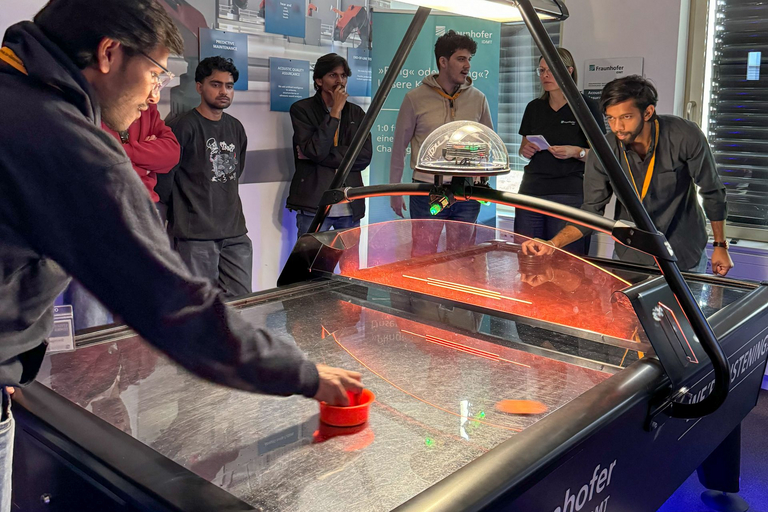
At the same time, the students gained further insights into the research hub during an excursion to the Fraunhofer IDMT, a lecture by Prof. Florian Römer on AI in measurement technology, and hands-on experiences in the fields of the Data-intensive Systems and Visualization Group (dAI.SY), as well as Neuroinformatics and Cognitive Robotics, the students gained further insights into the research hub.
At the conclusion of the program, the students presented their findings at the Bauhaus University Weimar – demonstrating that if you want to know how a building is faring, sometimes you have to not only look closely but also listen carefully.


Contact
Sabine Fincke
Projektmitarbeiterin ProTELC - Pro Thuringian Engineering Life Cycle