

For one week, sustainability issues and collaborative action took center stage at the TU Ilmenau – for the first time, in partnership with members of the European university alliance SUNRISE. From October 17 to 24, numerous events invited students and staff to engage with sustainable development, contribute ideas, and take action themselves. The Sustainability Days demonstrated that sustainability is a shared responsibility for the entire university. Many of the initiatives launched during the week will continue to have an impact beyond the event itself.
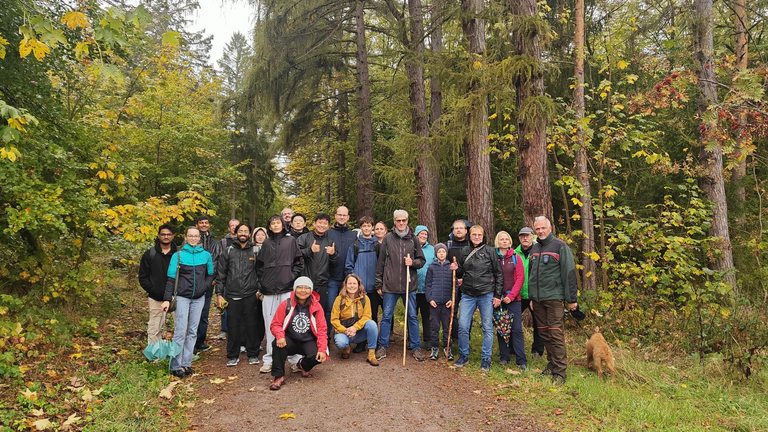
A total of 61 participants, who hiked a combined 652.5 kilometers, and plenty of new insights: The two SUNRISE Walks to kick off the event, led by city forester Matthias Wetzel and Prof. Jens Wolling, were a resounding success despite the fall weather. Together, the participants explored the forests around Ilmenau, learned more about forest restoration and the current challenges facing Thuringia’s forests, and at the same time gained insight into the activities of the European university alliance SUNRISE. In this way, the hikes combined exercise in the fresh air with an exciting exchange of knowledge and a sense of community.
Research for the forest of the future
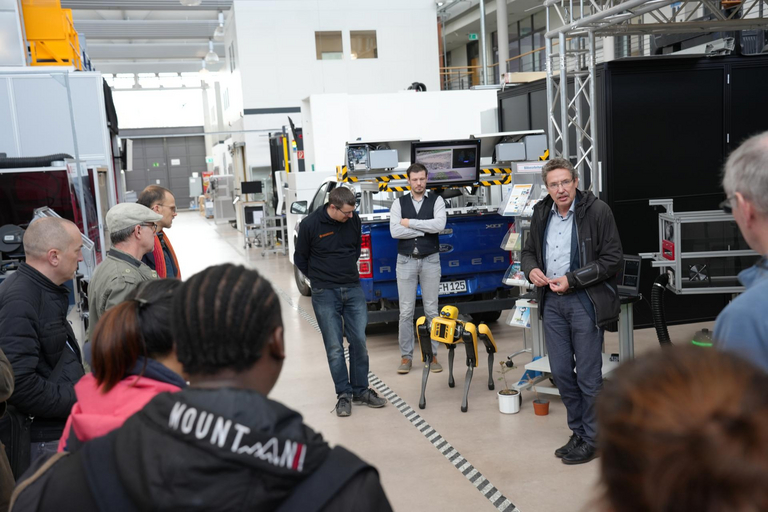
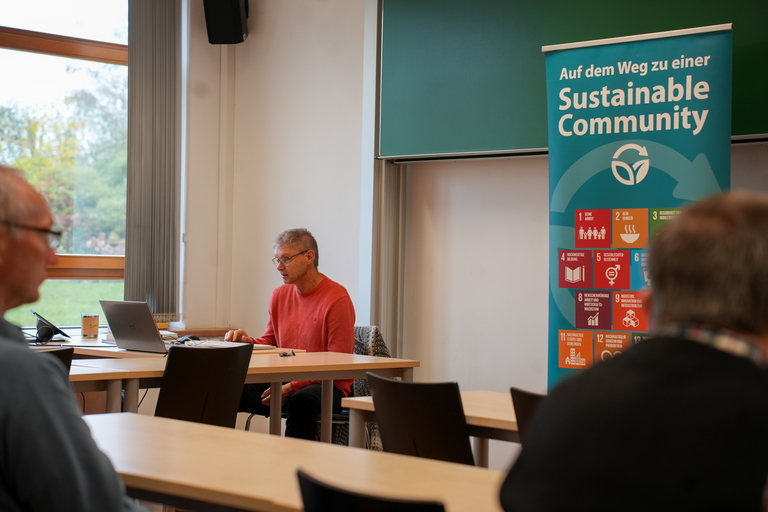
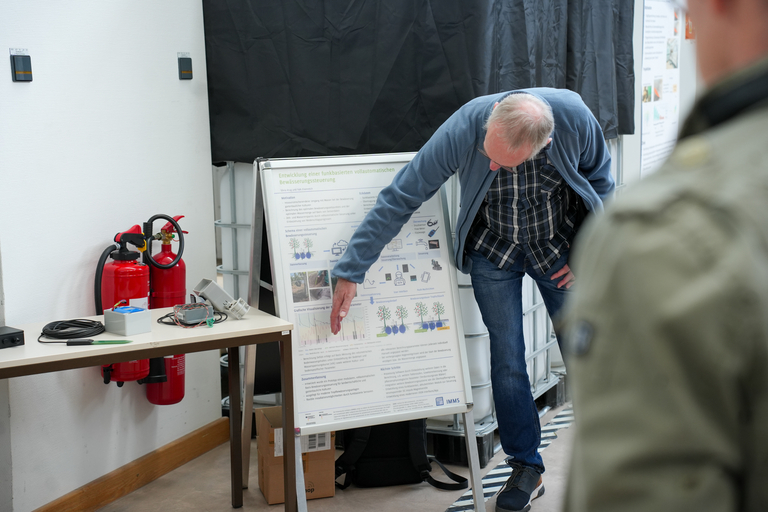
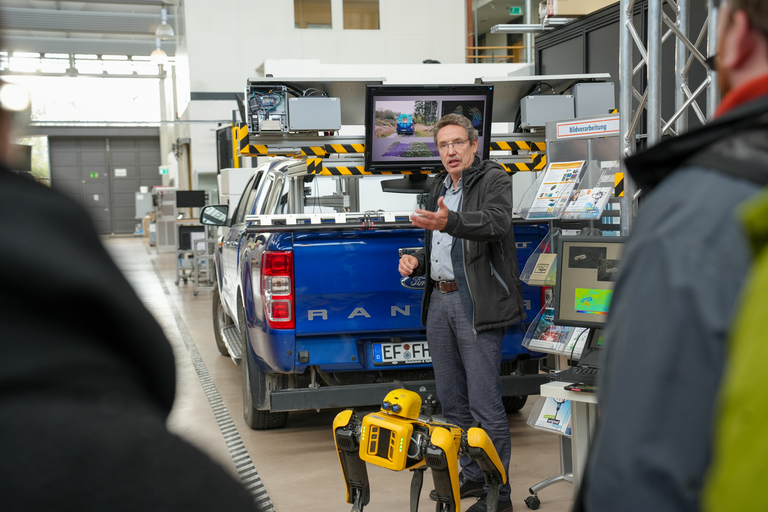
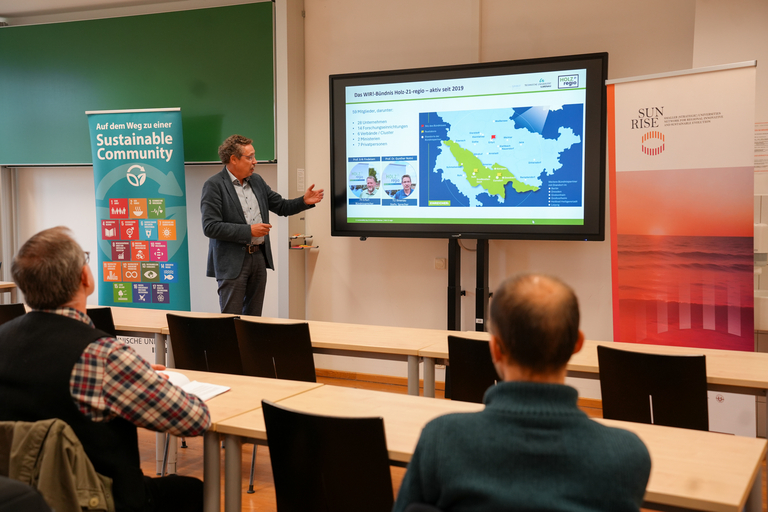
How can research help strengthen forests for the future? On Monday, this question was addressed in a short presentation by Prof. Dr. Jens Wolling on the history of Ilmenau and sustainable forest management, as well as insights from Prof. Gunter Notni into current research by the “Holz-21-regio” alliance. New technologies and solutions for climate-resilient forestry were presented, and interested attendees were able to experience them firsthand that afternoon at the Newtonbau experimental site. Among other things, the IMMS demonstrated sensor technology for monitoring the water balance.
In the evening, the Ilmenau Sustainability Corner on hsf student radio revisited the topic and discussed with Prof. Notni the potential and limitations of camera technology, measurement technology, and robotics for the forest of the future. The lively discussions also provided initial ideas for the next Sustainability Days in the spring.
Learning from European Partners
The online symposium “Sustainability Transformation at HEIs in the SUNRISE Alliance Network” on Tuesday offered a special glimpse beyond the campus. Representatives from the SUNRISE partner universities presented their activities and approaches in the field of sustainability in short presentations.
For TU Ilmenau, this exchange was, above all, an opportunity to learn from the experiences of other universities while also taking a critical look at its own activities. After all, TU Ilmenau already has numerous initiatives in place. At the same time, there is potential to raise the visibility of sustainability activities, further develop them, and link them together.
For Prof. Jens Wolling of the TU Ilmenau Sustainability Task Group, which guides the university’s path toward becoming a sustainable community, the connection between SUNRISE and the Sustainability Days was therefore particularly valuable:
The Sustainability Days demonstrated just how diverse the commitment to sustainability is at TU Ilmenau. At the same time, the exchange with our SUNRISE partners has shown us just how much we can learn from one another. That’s why combining the international activities with the Sustainability Days was a win-win situation, and we plan to continue this exchange in the spring with a meeting in Ilmenau of sustainability advocates from our partner universities.
Hands-On Sustainability
Numerous events throughout the rest of the week demonstrated that sustainable action doesn’t always require large-scale projects.
At the movie night hosted by the university film club, “WALL·E” offered an entertaining yet thought-provoking look at environmental pollution, resource consumption, technology, and responsibility. In the “Creative Clothing Recycling” workshop, participants turned old clothes into something new. In the University Library’s Makerspace, participants were able to bring their own ideas to life, share experiences, and gather inspiration for future Open Lab offerings.
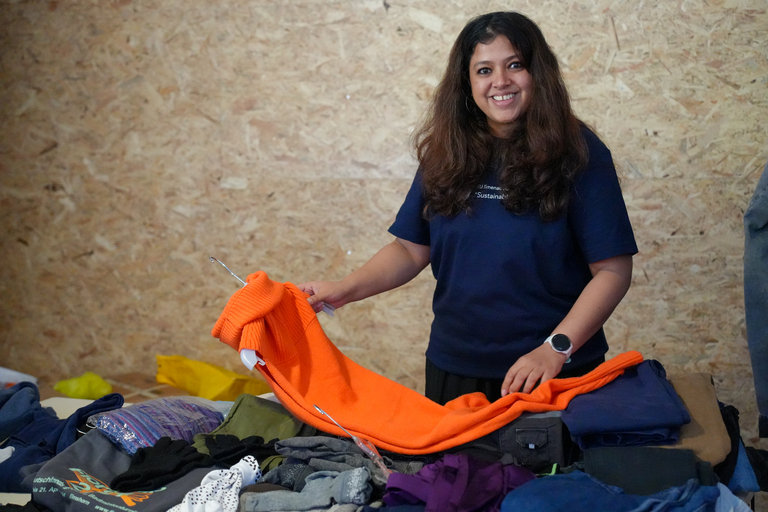
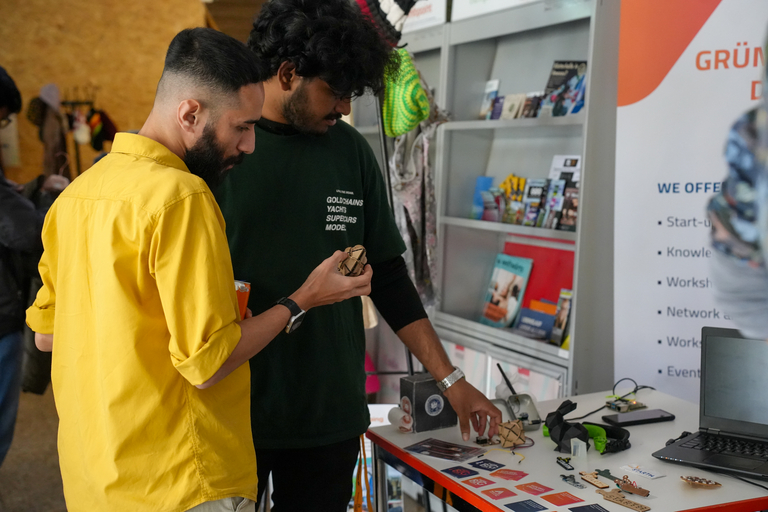
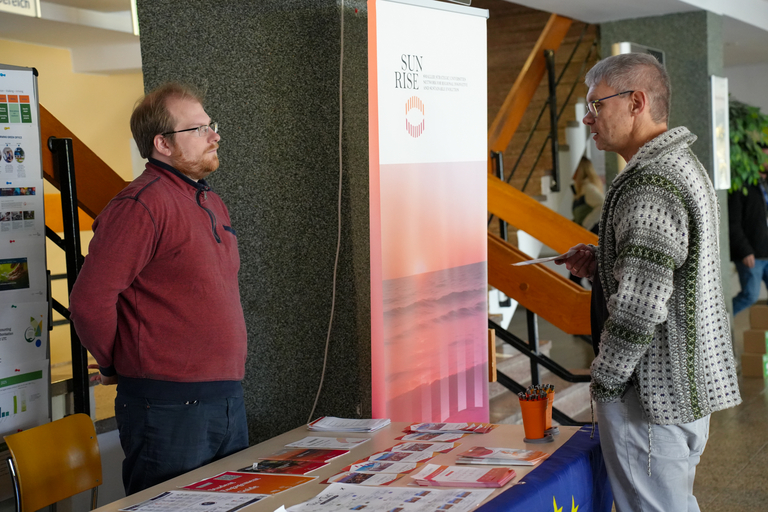
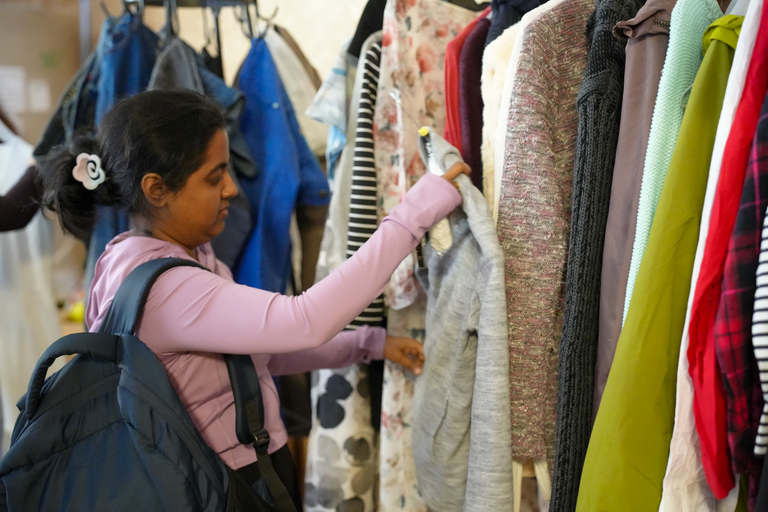
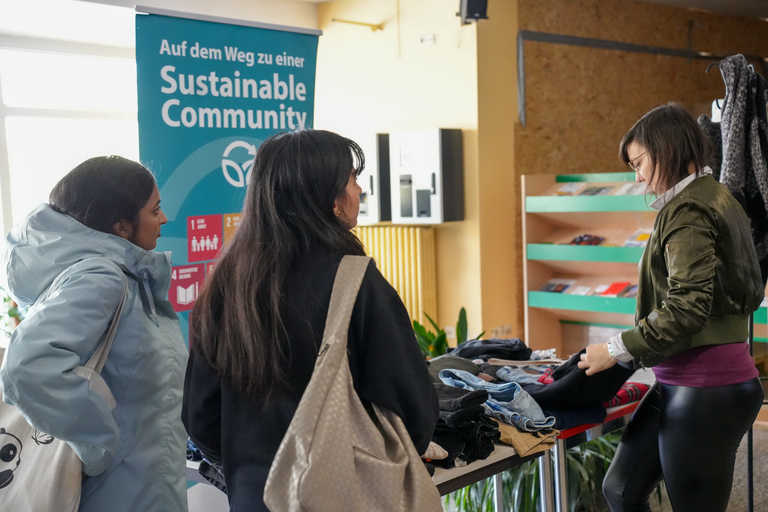
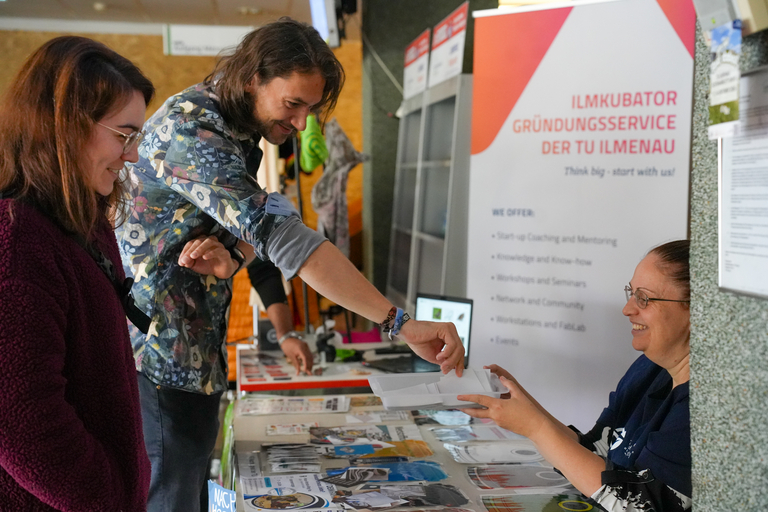
Different perspectives on sustainability also came together at the “Market of Opportunities” in the cafeteria foyer. The Second-Hand Fashion Corner, in particular, drew a great deal of interest: numerous items of clothing changed hands and were thus given a second chance.
A campus that grows together
The high level of participation in the garden project also shows that such activities are meant to continue beyond the Sustainability Days. “Our campus garden is currently developing particularly well, with many students and staff members involved in its planning and practical implementation,” reports Prof. Jens Wolling. At the community meeting, newcomers interested in the project were able to learn more about it and brainstorm together on how to move forward. At the same time, the garden volunteers were actively working throughout the week, removing a large portion of the invasive Japanese knotweed.
Committed volunteers also pitched in elsewhere on campus: At the spring flower bulb festival, they planted additional flower bulbs. These are intended not only to add color to the campus in the spring but also to provide insects with an early food source.
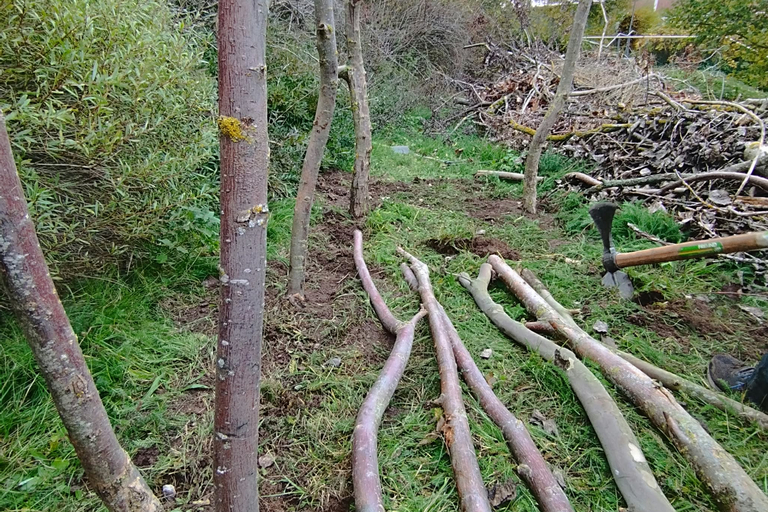
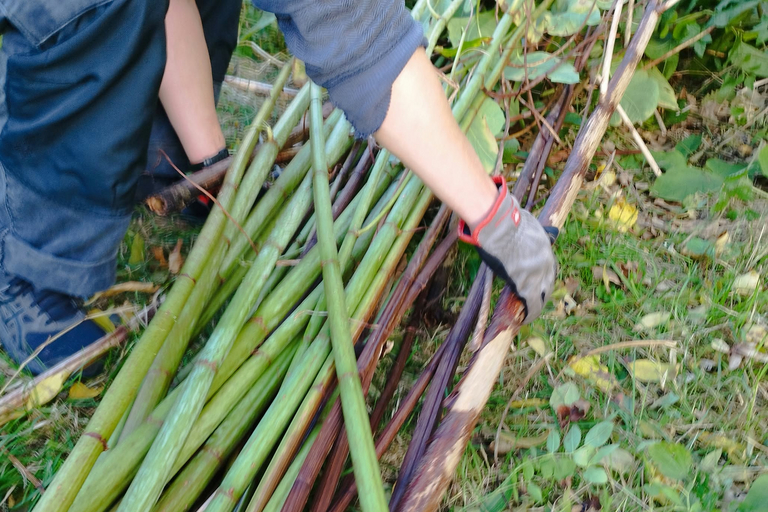
On the Ehrenbergwiese, volunteers also worked together to create the first section of a Benjes hedge made from pruned wood. It is intended to provide shelter and habitat for animals in the future. And with a newly planted cherry tree, the Student Council’s Sustainability Working Group continued the tradition of planting a tree for the graduating class. “It’s meant not only to make the campus greener but also to serve as a symbol of our connection to the university,” said Romana Rauch of the Sustainability Working Group. “We hope that our graduates will return to their former university time and again and be able to watch their tree grow and thrive year after year.”
Repair, reuse and sustainable travel
The Sustainability Days concluded with a focus on practical aspects of sustainable daily life. At the joint event organized by Engineers Without Borders and ADFC Thuringia, participants could have their bicycles registered and broken items repaired. The bicycle registration drew such a high level of interest that even the ADFC team was pleasantly surprised.
Meanwhile, at the repair workshop, participants were tinkering, testing, and figuring things out. The fact that a coffee maker—of all things—was the first successfully repaired item of the day provided a fitting conclusion, as Romana Rauch explains:
Of course, it had to be thoroughly tested after the repair! It was a successful conclusion to the Sustainability Days, demonstrating just how practical, collaborative, and sometimes even enjoyable sustainability can be—and how it can be put into practice.
It was especially wonderful to see how many people contributed their own ideas, curiosity, and drive.
Some projects will continue beyond the Sustainability Days, because sustainability doesn’t end with the event program. We look forward to continuing this work together and making our campus more sustainable, step by step. A heartfelt thank you to everyone involved—partners, volunteers, and participants—who made this week possible!
Impressions


Contact
Romana Rauch
Arbeitsgemeinschaft (AG) Nachhaltigkeit des StuRa