

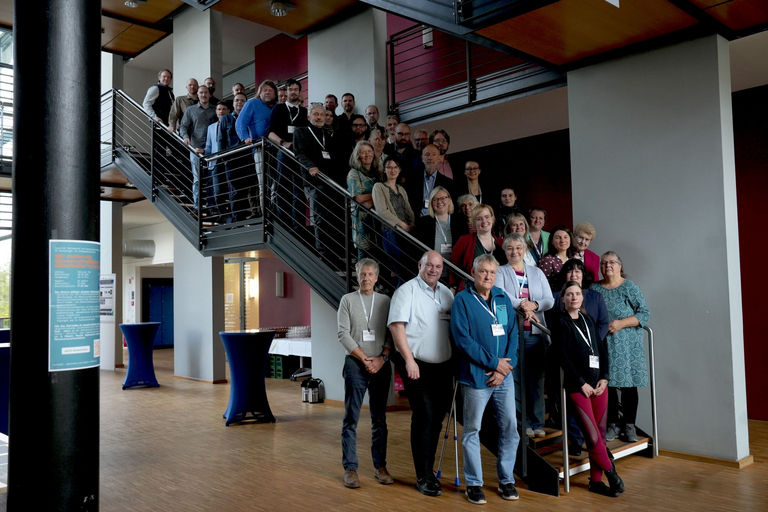
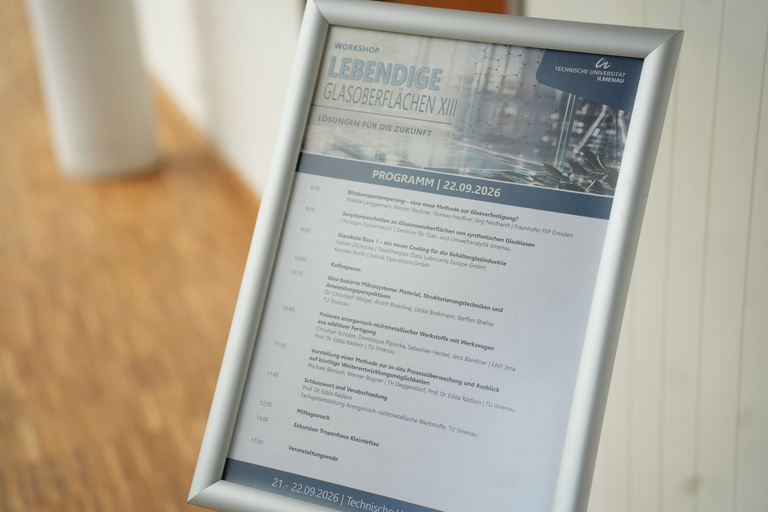
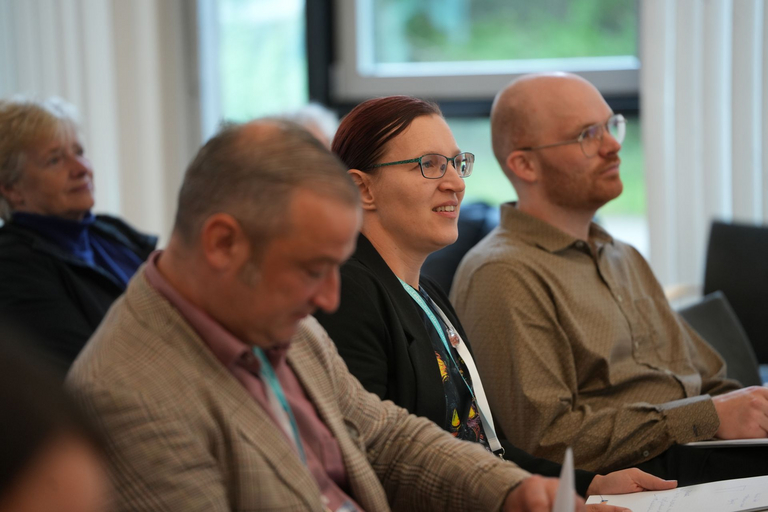
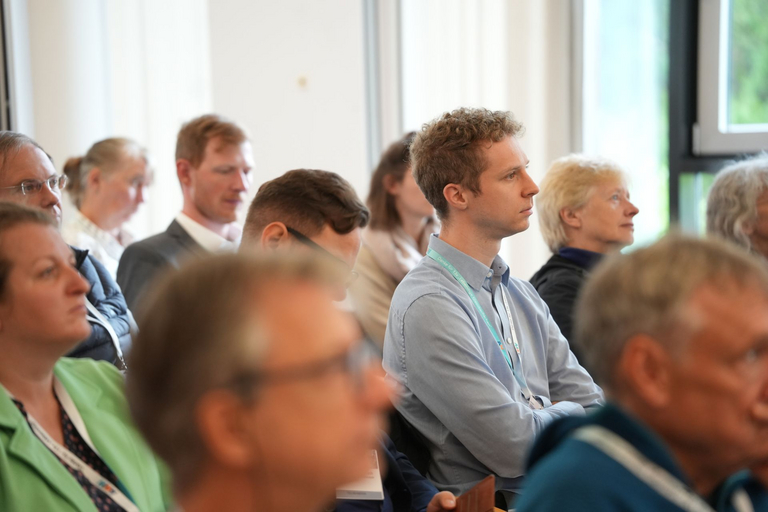
About 50 experts from research and industry gathered at the 13th “Living Glass Surfaces” workshop at the TU Ilmenau. The focus was on new solutions related to glass surfaces and a tribute to Prof. Edda Rädlein, who launched the workshop series in 2008.
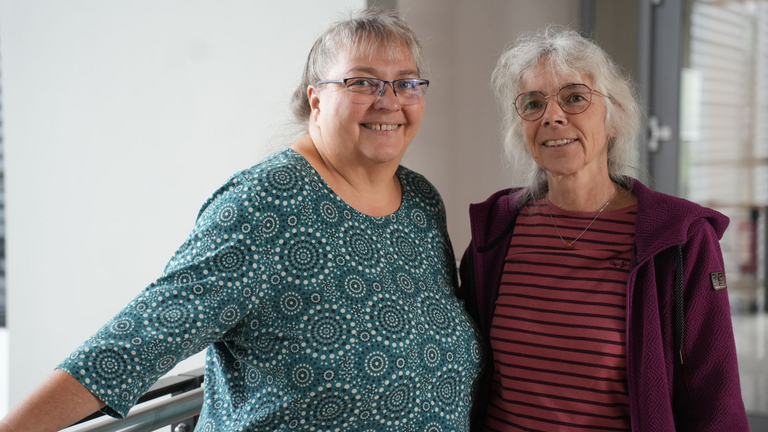
“Thank you for 13 × LGO” was printed on the lanyards worn by the 48 participants of the 13th “Living Glass Surfaces” workshop. It was a small gesture that spoke volumes: appreciation for a series of events that, over the years, has brought scientists from universities, research institutes, and companies to Ilmenau and repeatedly fostered dialogue among them.
On September 21 and 22, 2026, discussions on “Living Glass Surfaces” took place in the Meitner Building at the TU Ilmenau for what will be the last time in this format for the foreseeable future because the initiator and long-time host, Prof. Edda Rädlein, will be retiring next year. The workshop was thus not only a scientific forum but also a special moment to reflect on her work.
A surface full of secrets
At first glance, glass appears smooth, stable, and unchanging. For researchers, however, its surface is a highly complex environment: this is where properties change, interactions with other materials occur, and, in many cases, it is determined whether a glass component is suitable for a specific application.
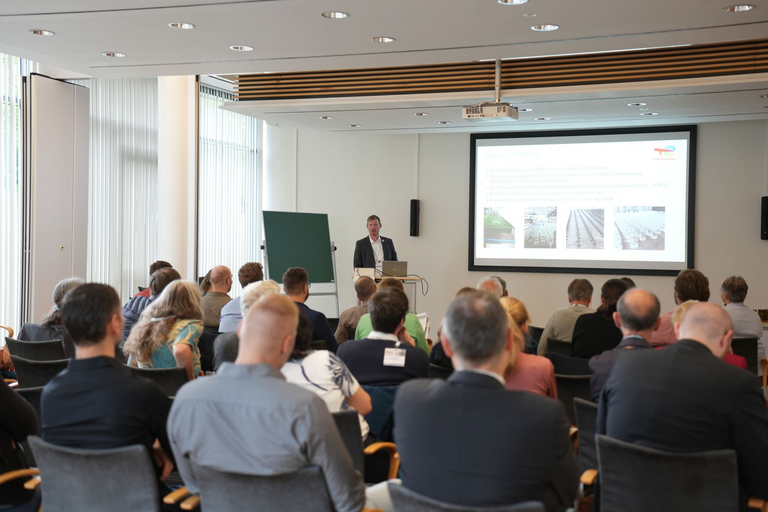
It was precisely this interface that was the focus of the workshop. The presentations ranged from basic research to concrete applications in energy and medical technology, optoelectronics, sensor technology, and packaging.
Fundamental considerations on the “ideal glass” by Prof. Lothar Wondraczek of Friedrich Schiller University in Jena kicked off the scientific portion of the workshop: What properties would such a glass need to possess? Can findings from basic research actually be useful for practical applications? In other words, can it, for example, help us better understand the transition from the material’s three-dimensional structure to its two-dimensional surface?
These fundamental questions were followed by numerous practical examples, ranging from laminated glass and microstructured components to container glass and medical technology. For example, Prof. Doris Heinrich from the Institute for Bioprocess and Analytical Measurement Technology (IBA) in Heiligenstadt presented an idea for in vitro research on cancer drugs, in which the structure of the glass surface becomes a tool for medical research: Cancer cells are suspended upside down on a microstructured glass substrate. Under the influence of the drugs, the cells detach and fall off.
New coatings, new structures
Coatings were also discussed during the workshop, such as those for the inside of syringes or the outside of bottles. Other presentations focused on the interaction of glass with gases, “gas bubbles in glass bubbles,” potential self-healing effects, and the tempering of glass using flash lamps.
The workshop concluded with a focus on processing: How can glass be microstructured in a targeted manner? What possibilities do 3D-printed polishing tools offer? And how can polishing be made more efficient?
Science thrives on exchange
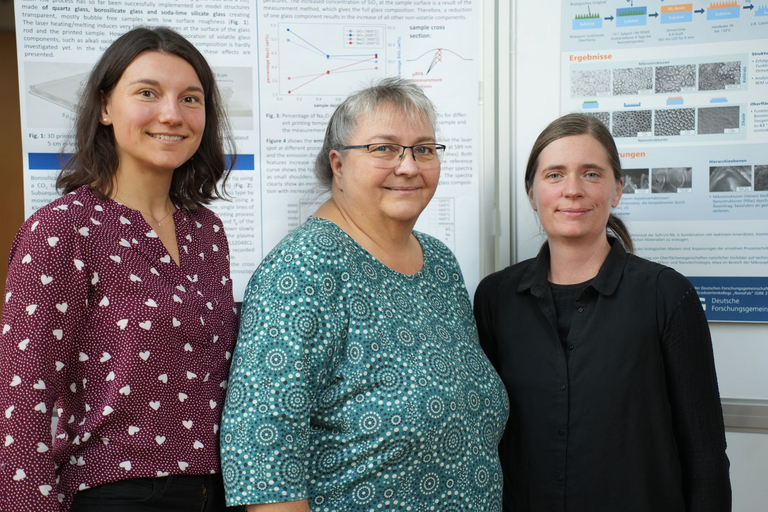
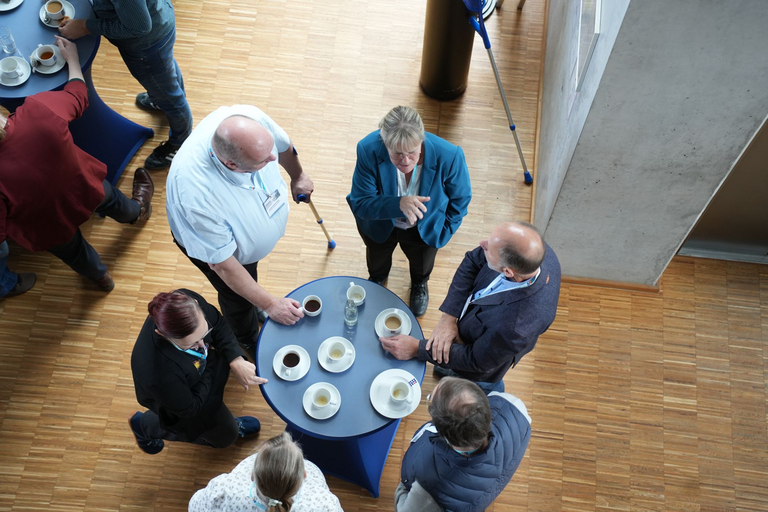
Just as important as the presentations were the conversations in between. During the breaks, posters were discussed, research findings were scrutinized, and new ideas were developed. Old acquaintances reunited, and young experts forged new connections.
This also highlighted what the workshop series achieved beyond its scientific content. “Living Glass Surfaces” was a place for exchange between different generations, disciplines, and institutions. The series brought together people working on very different aspects of glass and in doing so created a network that extends beyond individual research projects.
Prof. Edda Rädlein has shaped this exchange over many years. The final workshop in her series therefore also served as a personal farewell.
“Edda takes on the devil himself!”
This also ties in with what was arguably the most memorable quote from the workshop, spoken by a coating developer who described the challenge facing glass research: “The glass surface is a real pain in the neck.” Surfaces are sensitive, complex, and full of surprises. Anyone who wants to master them technically needs patience, experience, and courage.
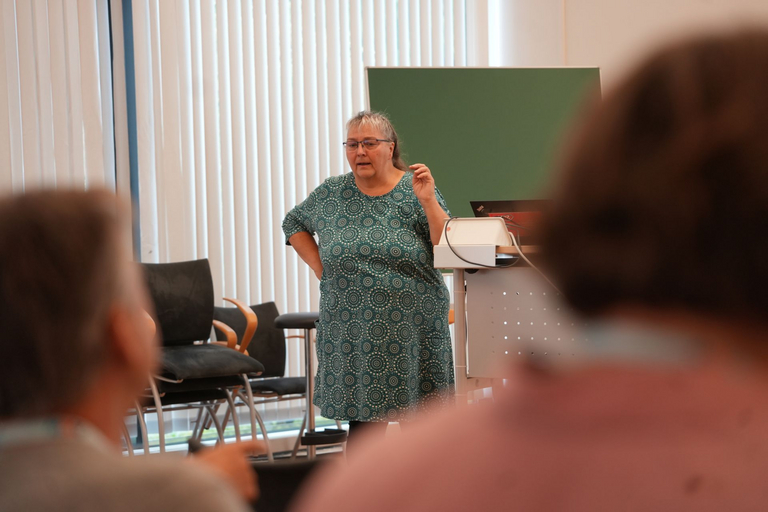
Dr. Gundula Helsch from Clausthal University of Technology put it in similar terms. In her laudatory speech, she looked back on 30 years of scientific collaboration and friendship with Prof. Edda Rädlein and drew her own conclusion from physicist Wolfgang Pauli’s quote, “God created solids, but the devil created surfaces”: “Edda takes on the devil himself!”
A look beyond the lab
To wrap up the event, the participants traveled to Kleintettau. At Heinz Glas, they were able to see how industrial glass production and sustainable energy use can be combined. There, the waste heat from a fully electric glass melting process is used to power a tropical greenhouse. As a result, the participants not only took home many scientific insights but also freshly harvested star fruit, papayas, and guavas.
Contact
Prof. Edda Rädlein
Fachgebiet Anorganisch-nichtmetallische Werkstoffe