

Electric mobility is becoming increasingly important on the road to climate-friendly mobility. In order for electric cars to perform even better in everyday life, they must not only be low-emission, but also efficient and comfortable, especially in extreme weather conditions. This is precisely where a large-scale European research project comes in, in which the Thuringian Center for Innovation in Mobility (ThIMo) at TU Ilmenau is involved together with eleven other partners from science and industry – and which has just started with a kick-off at TU Ilmenau.
Research
For climate-friendly mobility: Ilmenau scientists are researching more comfortable and efficient electric cars
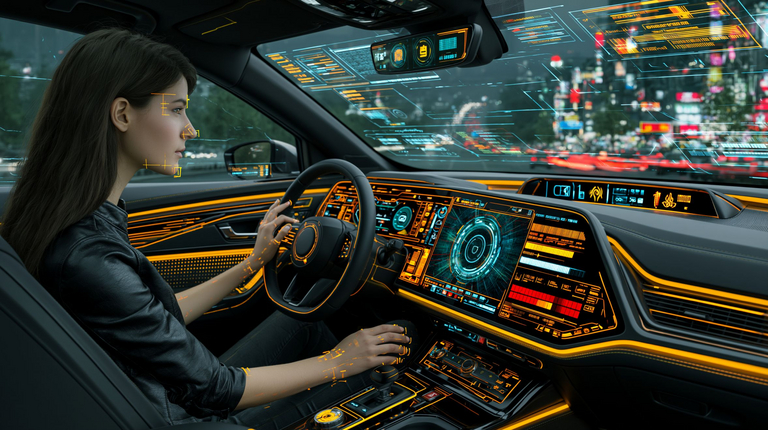
A key challenge of today's battery electric vehicles (BEV) is efficient thermal management. Heating in winter or cooling in summer in particular consumes a lot of energy from the battery and can significantly reduce the range. In the AETHER project "Advanced Thermal Comfort and Energy Management for Personalized, Efficient and Weather-Aware Electric Vehicle Operation", a total of twelve European project partners are therefore developing solutions that control these energy flows more intelligently and economically while ensuring a pleasant interior climate. The focus of the research work is on light vehicles up to 3.5 tons, so-called Light Duty Vehicles (LDV), as well as Light Commercial Vehicles (LCV).
Solutions for the operation of electric vehicles under extreme temperature and weather conditions
ThIMo is coordinating the project with its core competence in vehicle technology. With its specialized infrastructure, it also serves as a central test and development site for the project. Its high-performance four-wheel roller test bench in a climate chamber (MASTER) in combination with the virtual road simulation and test facility (VISTA) makes it possible to realistically test the operation of electric vehicles under extreme temperature and weather conditions, supported by wireless vehicle and smart city communication.
The work is being carried out by the "Smart Vehicle Systems" working group led by Dr. Valentin Ivanov, an internationally recognized expert in smart vehicle systems and electromobility, as well as by the RF and Microwave Research Group, which is contributing its expertise in particular to investigate smart city communication and electromagnetic field exposure. TITK e.V. in Rudolstadt, an affiliated institute of TU Ilmenau and an important strategic partner of ThIMo, is also involved. Based on a broad European network of partners in science and industry, the common goal is to develop complex mobility solutions and bring innovations into application more quickly.
AI-supported climate systems for optimized energy consumption
To this end, first of all the scientists will be investigating what drivers actually find comfortable by recording the needs of users in driving simulators, realistic driving tests and large-scale surveys. On this basis, personalized, AI-supported climate control systems are to be developed – in other words, intelligent controls that use artificial intelligence to automatically detect how warm or cool it should be in the vehicle and optimize energy consumption accordingly.
The artificial intelligence is supposed to serve as a kind of energy management in the vehicle: it distributes the available energy between driving mode, battery and interior air conditioning in such a way that as little range as possible is lost. In addition, external information such as weather data or digital services from smart cities - i.e. cities that digitally network traffic and energy - will be incorporated.

Sustainable materials for an energy-efficient overall system
In addition to the control software, the project partners are also developing sustainable and cost-effective materials, systems and components that make the overall system more efficient. These include so-called phase change materials (PCM) – special materials that can store and release heat like a thermal "buffer" to keep the interior temperature stable – as well as oil-free centrifugal compressors for the air conditioning system, which work more energy-efficiently than conventional systems. There are also modern power electronics components based on wide-bandgap semiconductors, particularly efficient electronic materials that lose less energy as heat, as well as additively manufactured heat exchangers from 3D printers that transfer heat particularly effectively. Noise and vibration aspects are also taken into account in order to further improve driving comfort.
The developed solutions wil be tested in virtual simulations, combined test environments and real vehicle demonstrators. Among other things, the scientists will test the extent to which energy savings can be achieved, how comfort is improved and how reliably the systems function even at extreme temperatures. Dr. Valentin Ivanov explains:
Our aim is to further develop electric vehicles so that they can be used efficiently, comfortably and reliably in every everyday situation. The AETHER project combines basic research and industrial application in order to make electric mobility more sustainable, intelligent and suitable for everyday use – and thus actively support the transition to climate-friendly mobility.

The three-year project was launched on June 1, 2026 and is being funded by the European Union with a total of around 6 million euros, of which more than 650,000 euros will go to TU Ilmenau. In addition to TU Ilmenau and TITK, the project consortium includes Armengaud Innovate GmbH (Austria), AVL Deutschland GmbH, Bluways International (Belgium), Dumarey Automotive Italia, Garrett Motion (Czech Republic), Politecnico di Torino (Italy), SODA Auto (UK), Delft University of Technology (Netherlands), University of Ghent (Belgium) and Alpha Engineering (Lithuania). The consortium also has an Industrial Advisory Board with AUDI, Melexis and Automotive Thüringen.
About the Thuringian Center for Innovation in Mobility (ThIMo)
Mobility is changing rapidly. New drive technologies, intelligent vehicle systems and automated and networked vehicles are opening up new possibilities - while at the same time placing greater demands on vehicles and infrastructure.
The Thuringian Innovation Center for Mobility (ThIMo) has been actively shaping this change for many years. Together with its partners at Ilmenau University of Technology and other research institutions, ThIMo is developing excellent scientific solutions that can be used in industrial practice and exploited economically.
In order to solve the complex challenges of tomorrow's mobility, specialist areas such as mechanical engineering, automotive engineering, computer science and control, plastics, communications and electrical engineering work closely together. This interdisciplinary cooperation forms the basis of research at ThIMo and strengthens the exchange between science and industry.
More information: www.mobilitaet-thueringen.de/en
Contact
Dr. Valentin Ivanov
Head of Smart Vehicle Systems