The Question!

What drew you to science – and what would you like to pass on to others?

Behind every research project are people, ideas, and stories. To mark the International Day of Women and Girls in Science 2026, we spoke with PhD students, postdoctoral researchers, and professors whose curiosity, passion, and dedication drive their work. We asked them: What are you researching? What inspired you to pursue a career in science? And what advice would you give to girls and young women considering a future in science?
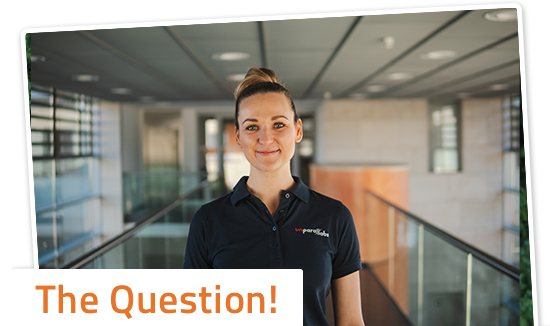
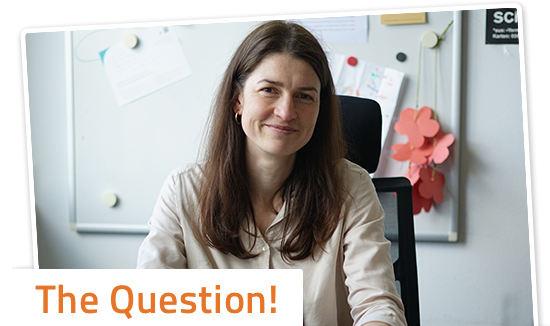
Viktoria Mayr

Felipa Reinlein, Innovation Management

In my doctoral thesis, I am looking at the cross-sector creation of innovations, particularly in the context of innovations that serve the common good. At the same time, I am part of the spin-off project “unparallabs”, which develops highly integrated, software-defined measurement systems. This combination of research and active research transfer allows me not only to further develop scientific findings theoretically, but also to put them directly into practice. I worked in industry before I started my doctoral thesis. That didn't completely fulfill me. As a curious, versatile, and inquisitive person, I wanted to go deeper, really understand things, ask my own questions, and be able to answer them in a well-founded way. For me, my doctoral thesis and research mean intellectual freedom, critical questioning, and the opportunity to actively work on topics that are socially relevant and close to my heart. My daily work follows the motto “failing forward”: every misstep is an opportunity for growth, innovation, and perseverance. My advice is: Have the courage to realize your full potential and explore new perspectives!

TU Ilmenau/Mara Seupel

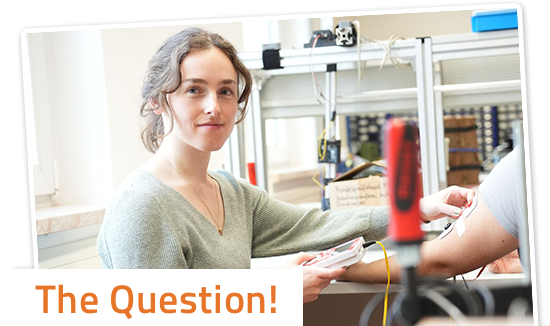
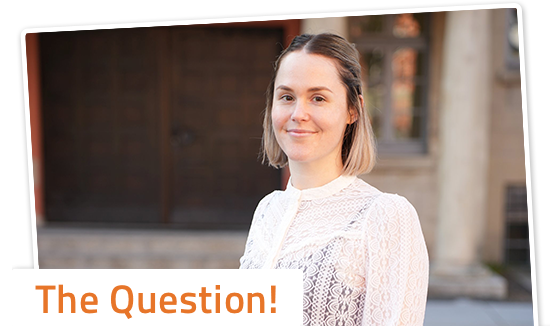
Katja Uhrhan, Biomechatronics

I am currently researching the fatigue behavior of muscles when they are activated by electrical stimulation (EMS). I use electromyography to measure muscle activity in order to analyze how much strain a muscle is actually under. This makes it easier to estimate when training is appropriately intense – and when it becomes too much. The aim is to be able to objectively assess training intensities and make EMS safer and more effective in therapy and fitness. I was drawn to science by my fascination with how the human body works and my desire to apply this knowledge to medical technology solutions. My advise: Don't be discouraged or intimidated if you are the only or one of the few (young) women in an internship, at university, in a project team or at conferences. Stand by your interests, trust in your abilities and follow your path with confidence.

TU Ilmenau/Mara Seupel

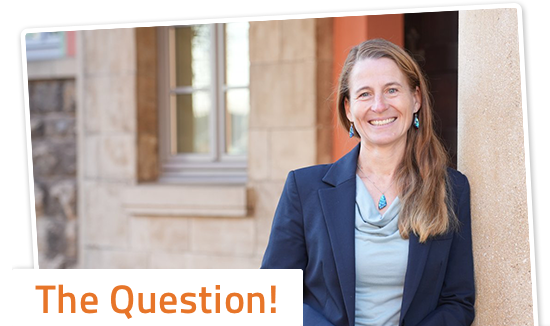
Prof. Dr. Kathy Lüdge, Theoretical Physics II

My research topics come from nonlinear dynamics, laser modeling, and photonics. They are interconnected within the interdisciplinary field of neuromorphic computing, where our research group investigates which systems and algorithms can be used to realize efficient analog computing using optical methods. As enormous amounts of energy are currently required for computing and artificial intelligence, energy-efficient, specialized solutions beyond conventional computer architectures are crucially needed. Curiosity and a thirst for knowledge have been ever-present for me since I was a little kid. During my physics studies, my curiosity was constantly fed with new ideas, enabling me to be creative and get to the bottom of things. My advice: Do what brings you joy! Research is very fulfilling. It can sometimes lead to sleepless nights, but also to exciting discoveries and a sense of achievement. Perseverance, self-confidence, and a reliable personal and professional network are key factors in overcoming challenges.

Stephan Riehmer

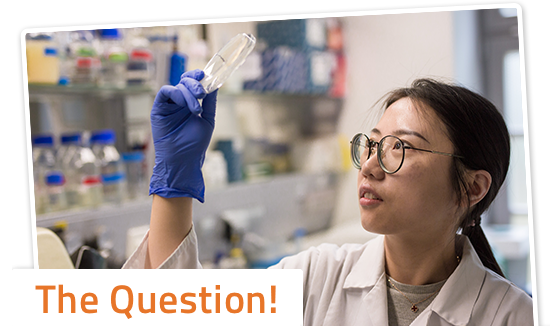
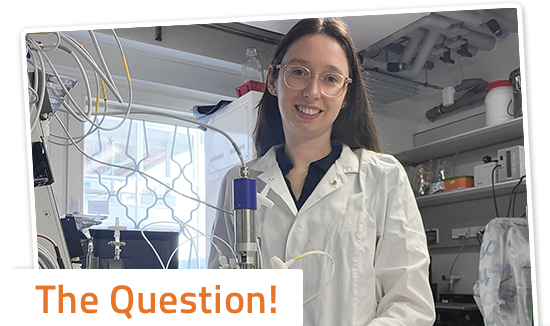
Ting Xie, Electrochemical Biotechnology

As a PhD candidate in electrochemical biotechnology, I am working on the development of a micro-electrochemical reactor system. This system enables the parallel cultivation and precise analysis of electroactive microorganisms. In the long term, my goal is to contribute to the efficient conversion of electrical energy into biomass and valuable products, supporting the development of sustainable technologies. I have always been fascinated by the question of how fundamental scientific principles can be translated into real-world applications. I am particularly interested in interdisciplinary research at the interface of electrochemistry, biology, and microfluidics, in identifying connections between these fields and turning ideas into practical solutions. This path is not always easy, but that is exactly what motivates me most: understanding challenges and developing creative solutions. My advice: Progress is not always about speed - often it comes from patient and deep thinking. Stay curious and have the courage to explore new paths. Science thrives on diverse perspectives, and women play an essential role in shaping its future.

Nicole Kalamarski, Biotechnical Micro- and Nanosystems for the Life Sciences/Institute for Bioprocess and Analytical Measurement Technology e.V.

As part of my doctoral research, I am studying infective endocarditis, a life-threatening inflammation of the endocardium, the innermost layer of the heart. To develop new treatment approaches, I am establishing a polymicrobial biofilm model that replicates a bacterially infected heart valve under laboratory conditions. This model serves as a test platform for antibiotic-loaded nanoparticles designed to specifically penetrate the biofilm and combat the bacteria there. What drew me to science is curiosity and a passion for finding answers. I learned from my parents that you should try things out, and that the best solution often lies where you didn’t look at first. My advice: do what you enjoy! If something comes easily to you and inspires you, that’s no coincidence - it’s a signpost. Science isn’t a sprint; it’s a long journey. And on a long journey, the only thing that will carry you is what you truly love.


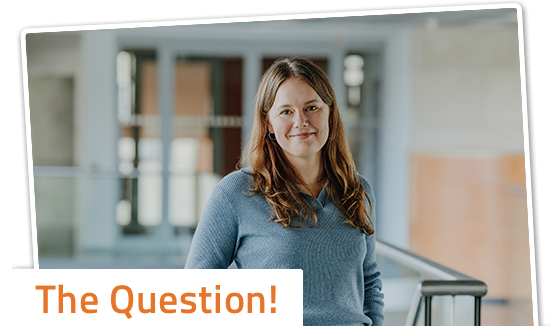
Elisabeth Wagner-Olfermann, International Risk, Crisis, and Science Communication Research Group

In my dissertation, I examine how transnational political leadership is portrayed and legitimized in media coverage during cross-border crises. At the same time, I am working on the MOVEwell project to advance the mobility transition in rural Thuringia. Amid the debate on increasing the weekly workweek and given my personal situation as a researcher and mother, I am also interested in how unpaid work - such as caregiving responsibilities and volunteer work - is addressed and negotiated in public and political discourse. My fascination with science didn't truly develop until after I completed my bachelor's degree, when I was working at a campaign agency and I realized that I usually wanted to research much more than necessary. Later, while studying at the Free University of Berlin, a facinating professor showed me how exciting a communication studies perspective on social and political issues can be. My advice: Don't compare yourself to others but instead focus on your own goals and needs. Especially as a woman, you should feel free to speak up and make your voice heard - there are now plenty of great initiatives out there, like MOM@Science.

TU Ilmenau/Mara Seupel

Dr. Lina Jaurigue, CZS Young Researchers Group for Interpretable Models for Efficient Analog Time Series Forecasting

I use the complex dynamics of physical systems for calculations. I am interested in how various machine learning methods influence these dynamics. This is relevant for applications in sensor technology, time-series forecasting, and climate modeling. I’ve always liked certainty. Formulas had unambiguous solutions. Answers to questions about the physical world depended less on my teachers’ interpretations and on how eloquently they were phrased. Today, I see things a little differently: In research, there is definitely not always certainty, and eloquent expression plays a major role in scientific communication. My advice: If you feel that you’re being treated differently as a woman, there’s a good chance that’s actually the case. Often, these differences aren’t obvious and come from people who mean well. Sometimes this also creates opportunities that may feel unfair on an individual level but, in the broader social context, help to balance out inequalities and should be taken advantage of.

TU Ilmenau/Mara Seupel

Clara Stolzenberg, Theoretical Electrical Engineering

I want to manufacture sensors – known as SQUIDs – in the clean room. SQUIDs (superconducting quantum interference devices) are highly sensitive magnetic field detectors. The sensors are designed to measure resources in deep underground areas as inhomogeneities in the magnetic field. My goal is to make the search for deep-lying raw materials more environmentally friendly by reducing the number of required boreholes. During my master's degree, I had the opportunity to write a paper and design a scientific poster. This allowed me to discover all the unknowns I had encountered in scientific work. I became more familiar with research over several years as a student assistant and was able to gain practical experience in the clean room at an early stage. When I was offered the chance to explore the fundamentals that interested me further as part of a doctorate, I didn't have to think twice. What advice would you give to girls and young women in science Life paths are not always straightforward. Enthusiasm for research, overcoming your own and others' doubts, and resilience are more important in the long run. Follow your own path!