

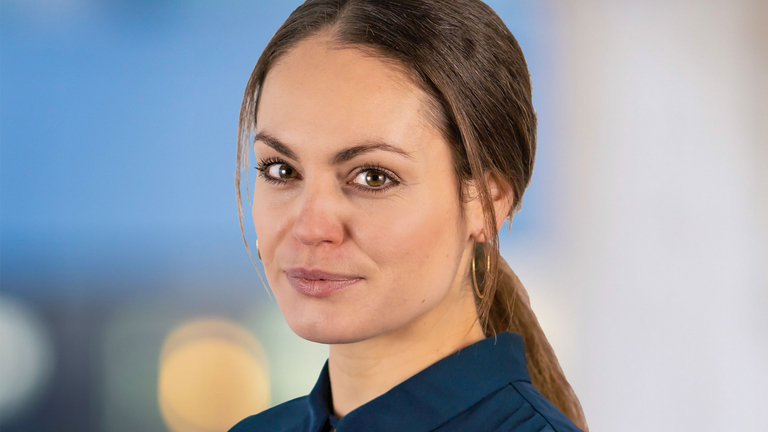
From Ilmenau to Denmark and the Netherlands, and back to Thuringia: Dr. Sophia Gänßle has experienced a variety of academic cultures. Today, the TU Ilmenau alumna works as a data scientist in futures studies at the Landesentwicklungsgesellschaft Thüringen mbH (LEG Thüringen). In this interview, she explains what makes the TU Ilmenau special to her, how a belly dance class led to an international performance project, and why Ilmenau is the perfect place for her to bring her own ideas to life.
You moved from Munich to Ilmenau over ten years ago. How did that come about?
I did my bachelor’s and master’s degrees in Media Economics in Ilmenau – the program is now called Digital Business. I think that’s a very fitting name for the digital age. Back then, the program was only offered in Ilmenau and at a university of applied sciences in Stuttgart. That’s why Ilmenau was my first choice.
After completing my studies, I earned my Ph.D. in the Economic Theory Group and then spent a year working as a postdoc in Ilmenau and Denmark. After that, I was appointed as an assistant professor at Erasmus University Rotterdam. I was there for about two years before I finally returned to Ilmenau.
Erasmus University Rotterdam is one of Europe’s most prestigious universities. What prompted you to return to Thuringia?
I’ve taught at various universities: in Ilmenau, at the Bauhaus University in Weimar, in Pforzheim, at the University of Southern Denmark in Esbjerg, and, of course, in Rotterdam. Through these experiences, I’ve learned three things.
First: Nobody has a secret recipe. Second: TU Ilmenau has truly outstanding facilities – from funding opportunities to laboratories to technical infrastructure. I’ve gotten to know other universities and can say that this one is something special.
And third, the quality of teaching is outstanding. In Rotterdam, for example, I co-supervised about 70 bachelor’s and master’s theses. For bachelor’s thesis supervision, I had just ten minutes per student. It was almost like speed dating: an alarm would go off, the students would switch seats, and it was already time for the next topic.
In Ilmenau, on the other hand, I had half an hour – sometimes even an hour – to talk with students about their theses. This allowed me to address any difficulties and provide more intensive support to particularly motivated students, even on more challenging topics. The supervision here is very personalized, and the students receive a lot of support. That’s truly special.
"The True Colors of Ilmenau—what makes Ilmenau such a great place to live—have stayed with me."
Were there any other reasons for your return to Thuringia and Ilmenau?
Yes, the many clubs and initiatives on campus that I just couldn’t let go of – the True Colors of Ilmenau, in other words, which make Ilmenau such a great place to live. People often talk about a “campus family” or “community.” I don’t think that quite captures the essence of it, though.
Here, many small communities emerge that together form a large academic community. This gives rise to a diverse sense of togetherness where people can share their interests, bring their own ideas to life, and get things off the ground together.
You yourself have been part of this community for many years and are once again today – in part through belly dancing. How did that start?
I started belly dancing – also known as oriental dance – in Munich almost exactly 20 years ago. When I came to Ilmenau, I looked for a class like that. I couldn’t find one at either the university sports center or the dance studios. At first, that disappointed me.
A year later, I checked the University Sports Center’s website again – this time thinking I might take a fitness or yoga class. And lo and behold: there was a course in oriental dance, taught by a math student. Of course, I signed up right away. And that’s how a very special story began.
The Oriana dance group emerged from this class. How did the project develop?
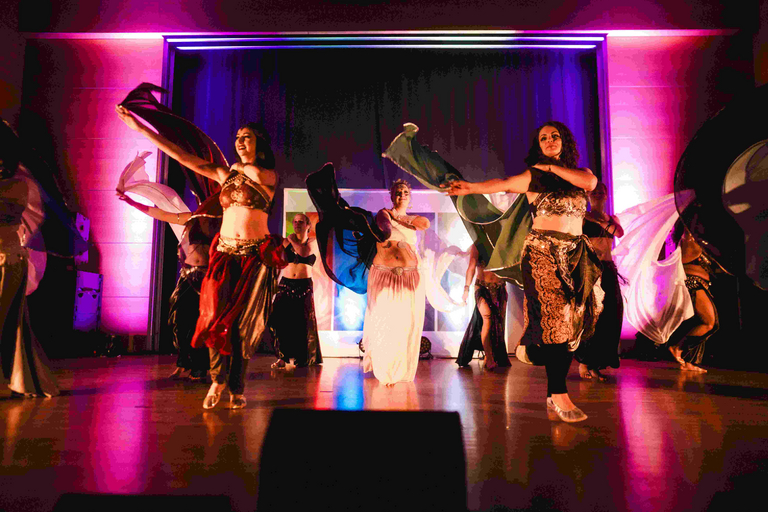
In 2014, we had our first performance together, back then at the BH-Club. That’s how the Oriana project took shape. It was also made possible by the University Sports Center’s program, which allows students to offer their own classes and coach other students. Of course, there are also professional instructors. But it’s precisely the opportunity to take the initiative and get creative that makes the program so diverse.
Great events have emerged from such initiatives, such as the Dancing Bash, which now takes place every year as part of Bergfest Week. Dancers from various university groups come together to put on a joint show. Every year, between 70 and 100 people take the stage and present a program lasting about one and a half to two hours. Depending on the event, 200 to 300 spectators attend – sometimes even around 500.
It’s impressive to see what has become of the original idea of a math major who thought to herself: “I’m pretty good at belly dancing and would love to offer a class.”
To what extent are you still active with Oriana yourself?
Oriana has been around for over ten years now. We celebrated our anniversary last year with a big event in the Audimax and a professional light show. There’s a typical Ilmenau story behind that, too: people who studied lighting engineering at the university later started their own businesses and now offer their skills professionally.
Over the past ten years, we’ve had dancers from all over the world and have performed in more than 70 shows. I find it extraordinary that the project has developed this way and that demand remains so high to this day.
“For me, Ilmenau means: excellence, diversity, and cosmopolitanism”
In your view, what sets Ilmenau apart from a major city like Munich in this regard?
To be honest: In Munich, hardly anyone cares whether you want to get your own project off the ground or perform somewhere. In Ilmenau, on the other hand, there’s an infrastructure and a community that make such ideas possible.
This isn’t just true for dance. Here, people create films, radio shows, music festivals, and short film festivals – a wide variety of formats that people develop together and bring to life. If you’re passionate about something, you’ll often find the opportunity here to actually make it happen.
Does that also apply beyond sports and culture, for example in engineering?
Absolutely. If someone wants to set up a bike repair shop, develop drones or robots, or build their own soapbox car, there are people, labs, and structures here that support such projects. During my time at other universities, I never experienced these kinds of opportunities. I’m particularly impressed by how much support the initiatives in Ilmenau receive: People come to events, get inspired, and help further develop ideas. This creates a culture all its own – Culture made in Ilmenau.
As an alumna of our university, what advice would you like to give new students as they begin their studies?
You are part of this culture. Help shape it!
It’s said time and again – and you’ve probably already heard it this week or will hear it soon: Ilmenau is what you make of it. I can only emphasize that. I’d add this: If you have the courage to share your ideas and interests, your potential will be recognized and nurtured in Ilmenau.
I hope you find your place in Ilmenau – or create it yourselves, just as we did. Bring your own light to this vibrant community. Because for me, Ilmenau means excellence, diversity, and openness to the world.
Alumni Campus

Whether it’s Technische Universität, Technische Hochschule, or Hochschule für Elektrotechnik – studying in Ilmenau has had a decisive impact on the lives and professional careers of thousands of alumni. During their time as students, they gained knowledge, celebrated successes, weathered setbacks, and experienced a sense of community. The TU Ilmenau campus was a temporary home for them and will always remain their academic home. This connection is mutual: the alumni, too, have helped make TU Ilmenau what it is today.
The alumni network makes it possible to maintain this connection, stay in touch with former classmates, get involved with current students, and benefit from a strong global network.