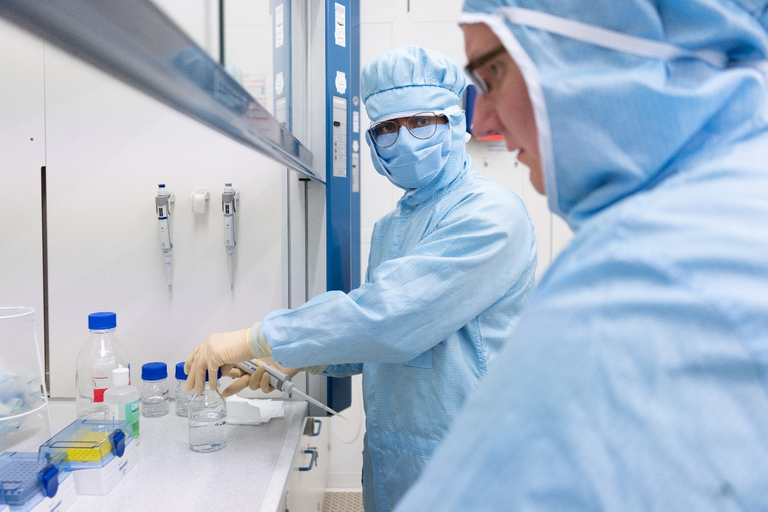
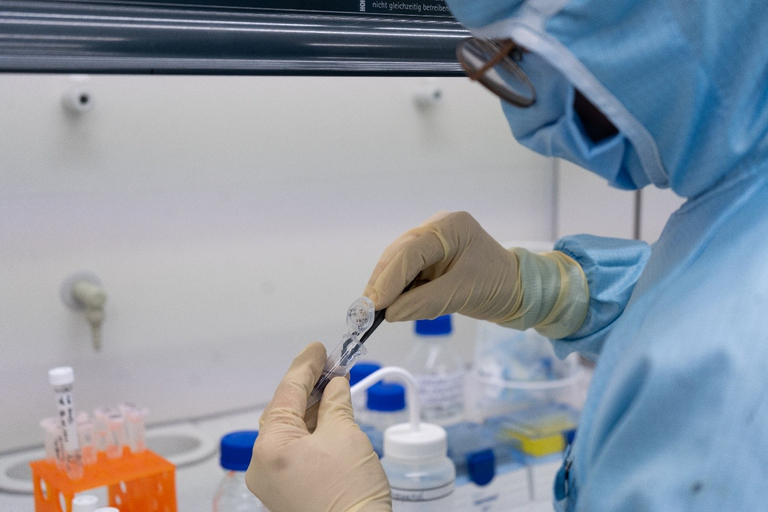
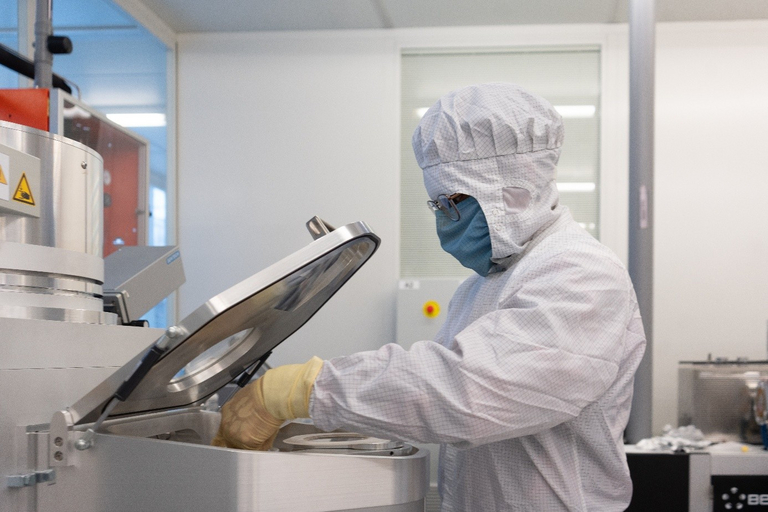
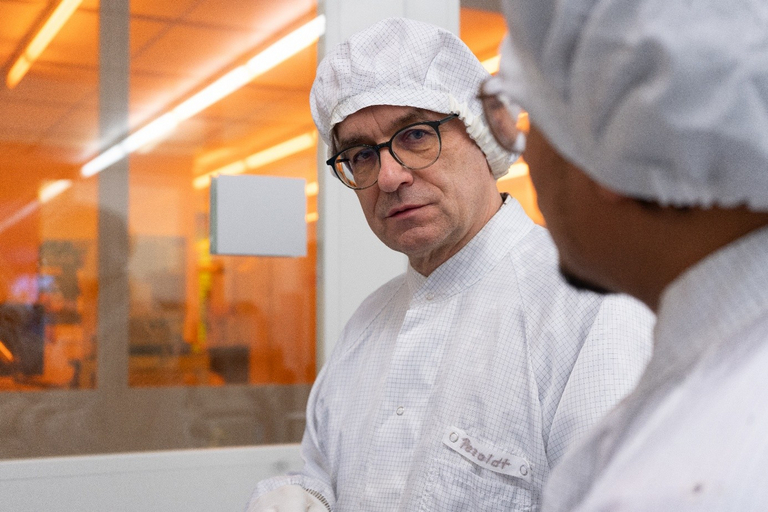
Today, artificial intelligence can recognize speech, evaluate images and process large amounts of data in the shortest possible time. However, the more powerful these systems become, the clearer their downside becomes: AI requires enormous computing power - and therefore a lot of energy. This is precisely where an interdisciplinary research project at the Ilmenau School of Green Electronics comes in. At the interface of life sciences, materials science, nanotechnology, and electrical engineering, researchers are searching for a new, energy-efficient approach to information processing: computing with life’s fundamental molecule.
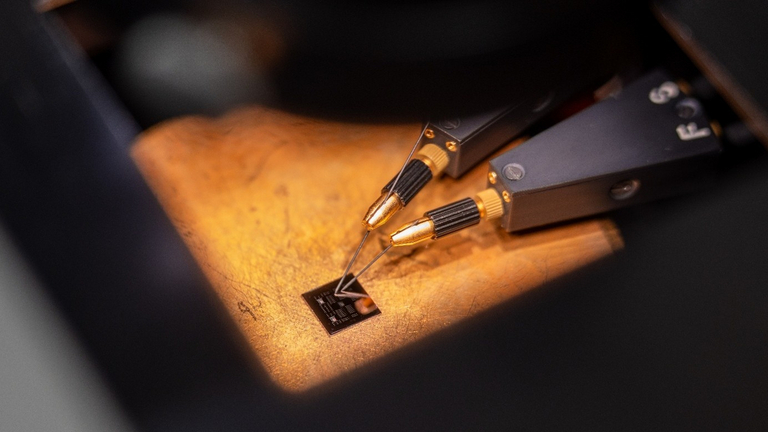
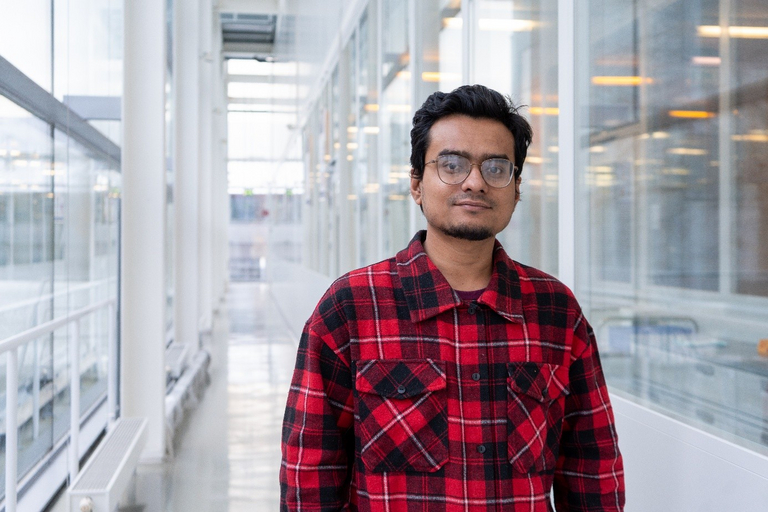
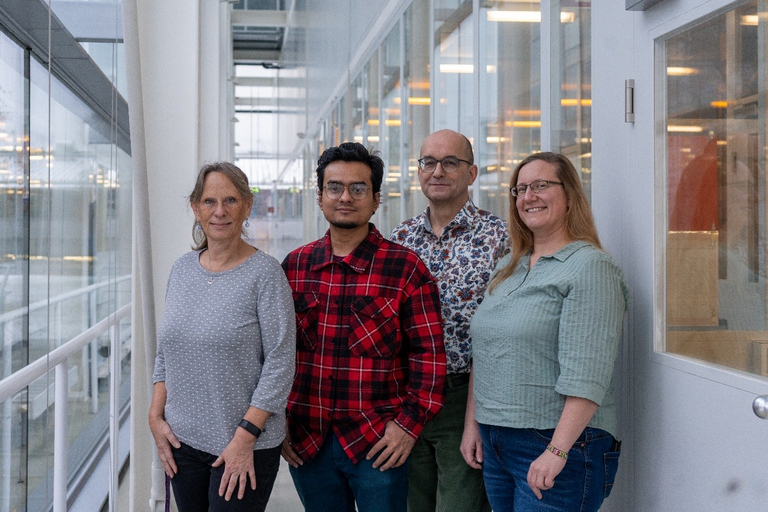
Saadman Abedin, a doctoral researcher at the Ilmenau School of Green Electronics, is working with his Ilmenau colleagues Dr. Peggy Reich, Dr. Jörg Pezoldt and Dr. Heike Bartsch on a fascinating research question: Could DNA serve as the basis for electronic devices that simultaneously store and process information – and thereby operate far more energy-efficiently than today’s electronics?
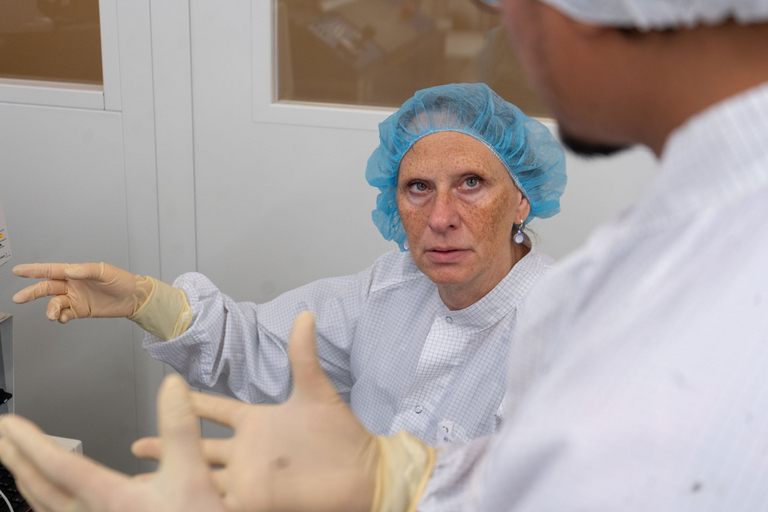
DNA is best known as a carrier of genetic information. However, for electronics research, the molecule is also interesting for another reason: it exhibits so-called memristive properties. This means it can “remember” previous states. In this way, DNA differs from conventional electronics, where memory and processing are separate functions. As biosystems engineer and bioinformatician Dr. Peggy Reich explains:
While transistors, the smallest switches in conventional electronics such as smartphones or computers, only recognize “on” or “off,” memristors can remember how much current has previously flowed through them, even after the power supply has been switched off. This behavior resembles the connections in the human brain, which strengthen or weaken through use.
This is precisely why DNA is of interest as a basis for so-called neuromorphic systems – hardware modeled on biological neural networks that processes information in a highly energy-efficient way. This is particularly relevant for applications in artificial intelligence, where many computations occur in parallel, Reich notes:
While transistors, the smallest switches in classic electronics such as smartphones or computers, only know 'on' or 'off', memristors can remember how much current has previously flowed through them – even if the power supply is interrupted. This behavior is similar to the connections in the human brain, which strengthen or weaken with use.
This is precisely why DNA is interesting as a basis for so-called neuromorphic systems, i.e. hardware that functions along the lines of biological nerve networks and processes information in a particularly energy-efficient manner. This is particularly relevant for artificial intelligence applications in which many computing operations run in parallel.
In addition, Reich notes:
In contrast to conventional electronic base materials such as silicon or metals, DNA is a renewable and biodegradable raw material.
This "green" property makes DNA particularly exciting for the team at the Ilmenau School of Green Electronics. PhD student Saadman Abedin explains:
Since memristor technology is still in its infancy, many research groups around the world are working with different materials and architectures. Our approach is to incorporate biomaterials, i.e. DNA, into this technology with a defined sequence, structure and orientation. In this way, we want to understand whether and how DNA can be used not only as a storage medium, but also as a functional electronic material.
The interdisciplinary research team combines different areas of expertise to achieve this: Dr. Peggy Reich conducts research in the field of Biotechnical Micro- and Nanosystems in Life Sciences, Dr. Jörg Pezoldt in Nanotechnology and Dr. Heike Bartsch in Electronics Technology. Doctoral student Saadman Abedin, on the other hand, contributes experience from his Master's degree in Micro- and Nanotechnologies and his work as a research assistant at the Center of Micro- and Nanotechnologies and the Department of Nanotechnology.
High-precision electrode structures in the nanometer range
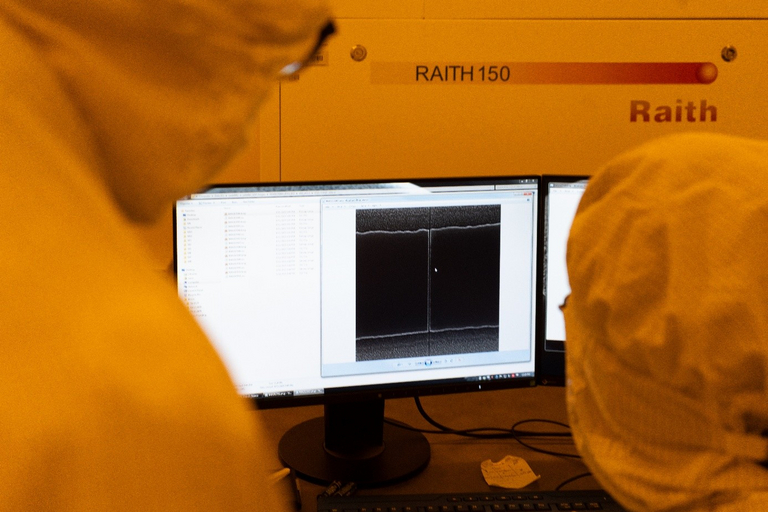
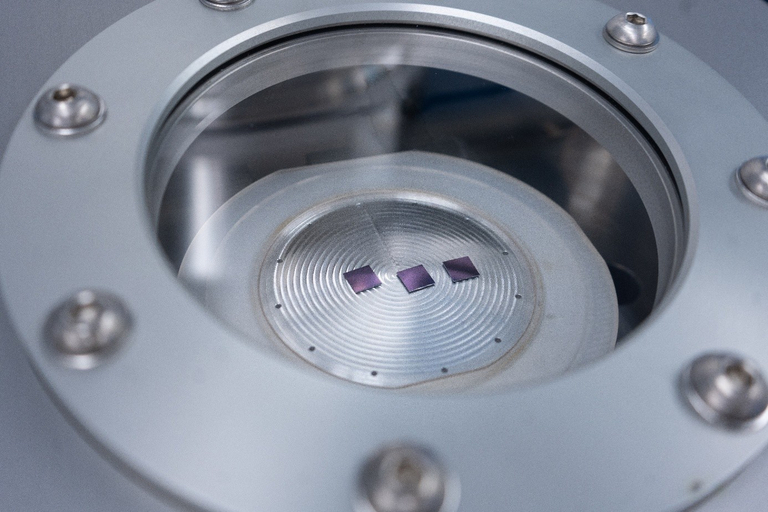
A key challenge for the research team was initially to produce high-precision electrode structures in the nanometer range - i.e. structures less than 15 nanometers in size with gaps of just a few nanometers. The researchers then investigated how electrical signals are transported by DNA molecules inserted between these tiny electrodes. Saadman Abedin explains:
'By placing the DNA between the contacts or electrodes - similar to a conductive wire - we can specifically influence the conductivity and thus the desired function by changing the base sequence or by reversibly attaching additional molecules, so-called oligonucleotides.
In this way, the researchers hope to gain a better understanding of the role that the exact structure of DNA plays in memristive behavior.
From basic research to pattern recognition
The project is still clearly anchored in basic research. Nevertheless, there are already concrete application prospects: The components developed are to be tested as examples for intelligent pattern recognition - for example in image recognition.
The vision behind this is far-reaching. If it is possible to combine storage and processing in sustainable molecular structures, this could pave the way for more resource-efficient computer architectures.
At the same time, the project shows how much the development of future electronics is changing. Progress is no longer only being made through smaller and faster chips, but also through completely new, more sustainable materials and principles. Ilmenau is therefore researching a technology that is based on nature - and therefore has the potential to fundamentally change technical systems, says Dr. Peggy Reich:
DNA-based memristors could not only contribute to more energy-efficient computers, which is of great importance in view of the growing global demand for data. They also open up new possibilities for bioelectronic systems that can interact directly with biological processes - for example in medical diagnostics, biosensors or even interfaces to the nervous system. Our research aims to bridge the gap between electronics and biology and enable sustainable, energy-efficient and biologically integrated technologies for the future.
M.Sc. Saadman Abedin