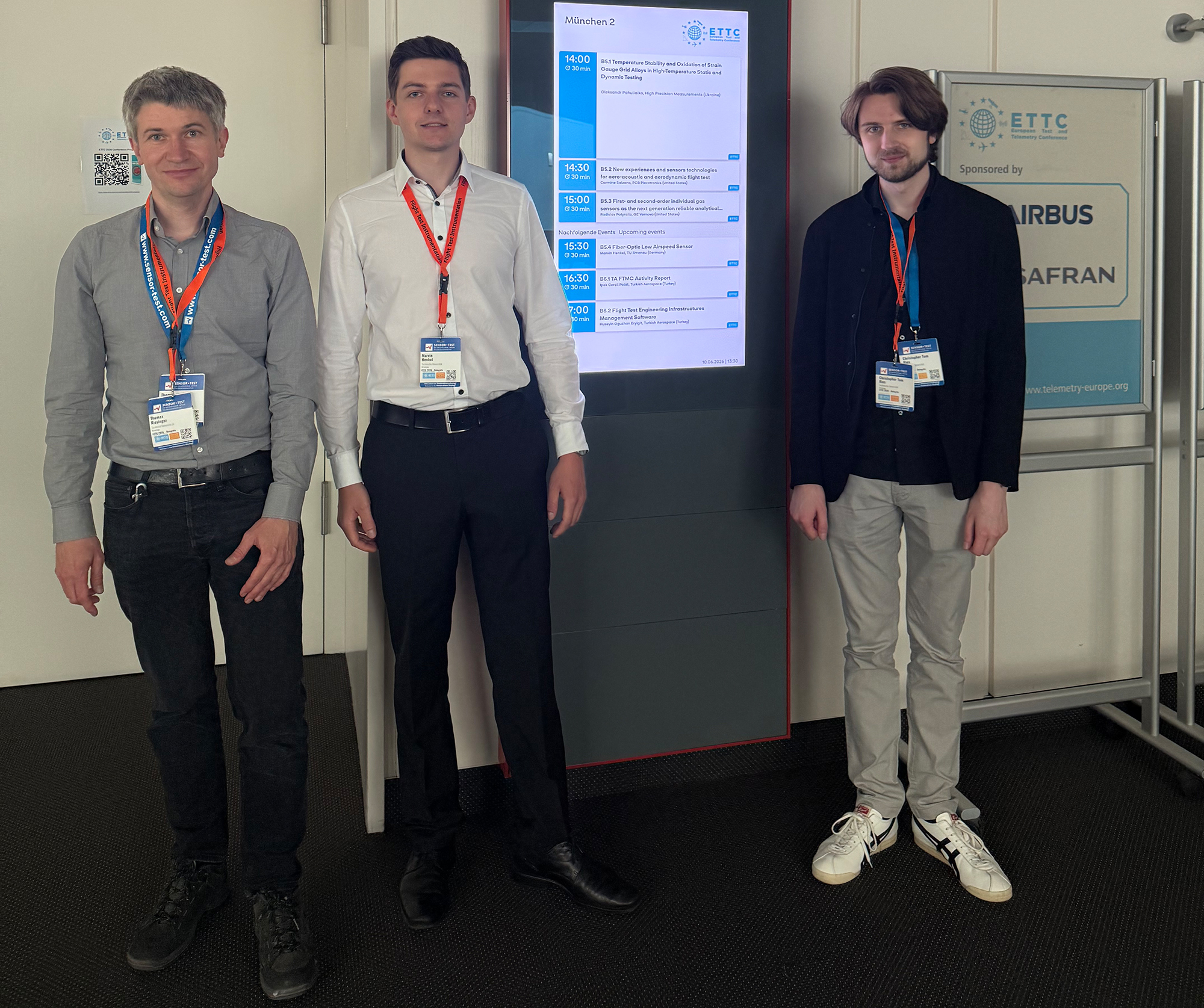
From June 9 to 11, 2026, the European Test and Telemetry Conference (ETTC) took place in Nuremberg in conjunction with the Sensor+Test trade show.

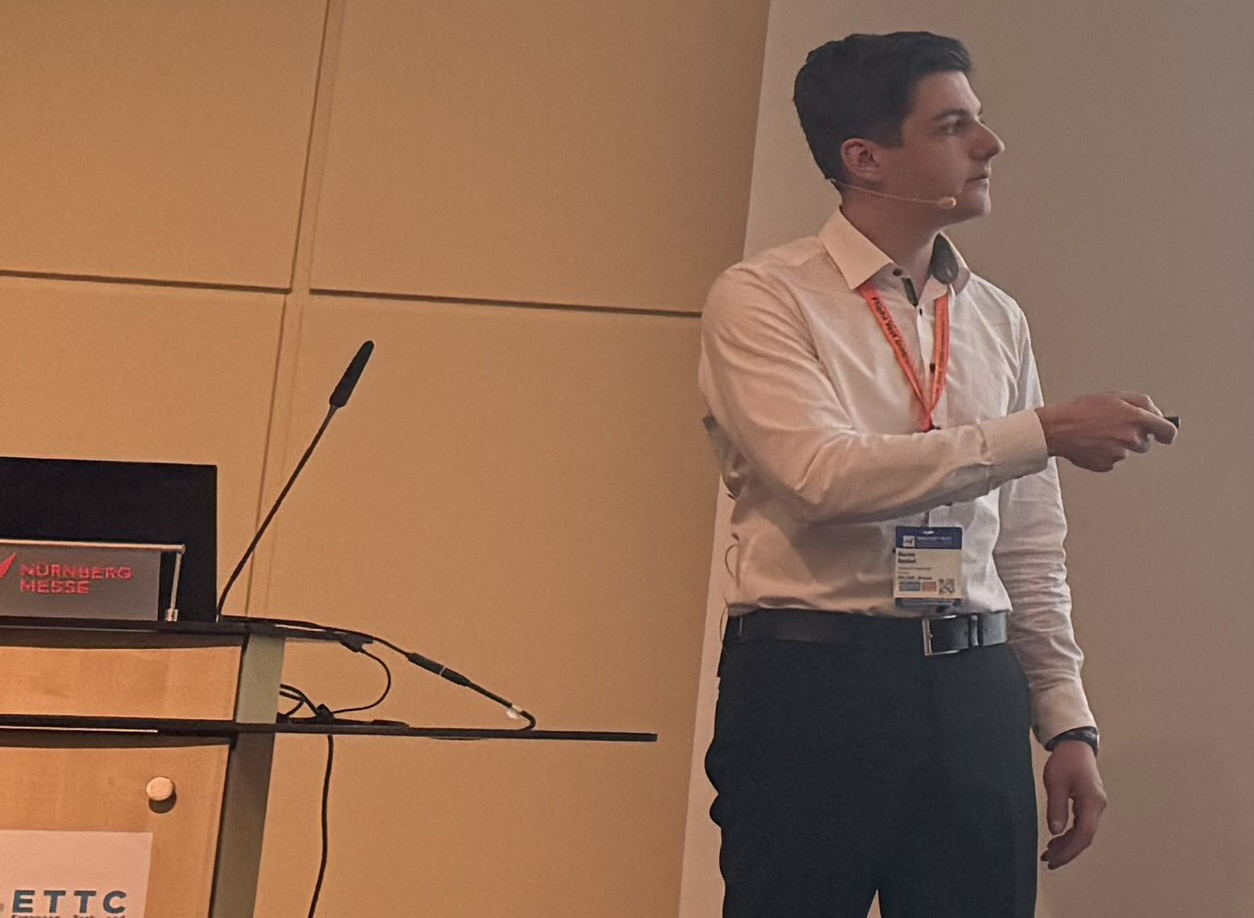
Marvin Henkel from the fiber-optic sensor team led by Assistant Professor Thomas Kissinger gave a technical presentation on a novel fiber-optic low-airspeed sensor for helicopters, which was developed in collaboration with Airbus Helicopters Deutschland GmbH (Donauwörth).

The sensor principle is based on fiber-optic strain measurement using fiber-segment interferometry and enables the measurement of airspeed and wind direction in the low-speed range below 20 knots—a range in which conventional Pitot systems fail.

The measurement resolution in the nanometer range allows for highly precise detection of sensor deformation despite its robust, cylindrical design. Due to the quadratic relationship between aerodynamic drag and flow velocity, a measurable deflection of the sensor occurs in the nanometer to micrometer range. This was successfully validated through measurements in the wind tunnel at the Technical University of Ilmenau in a speed range of 1 to 10 m/s.

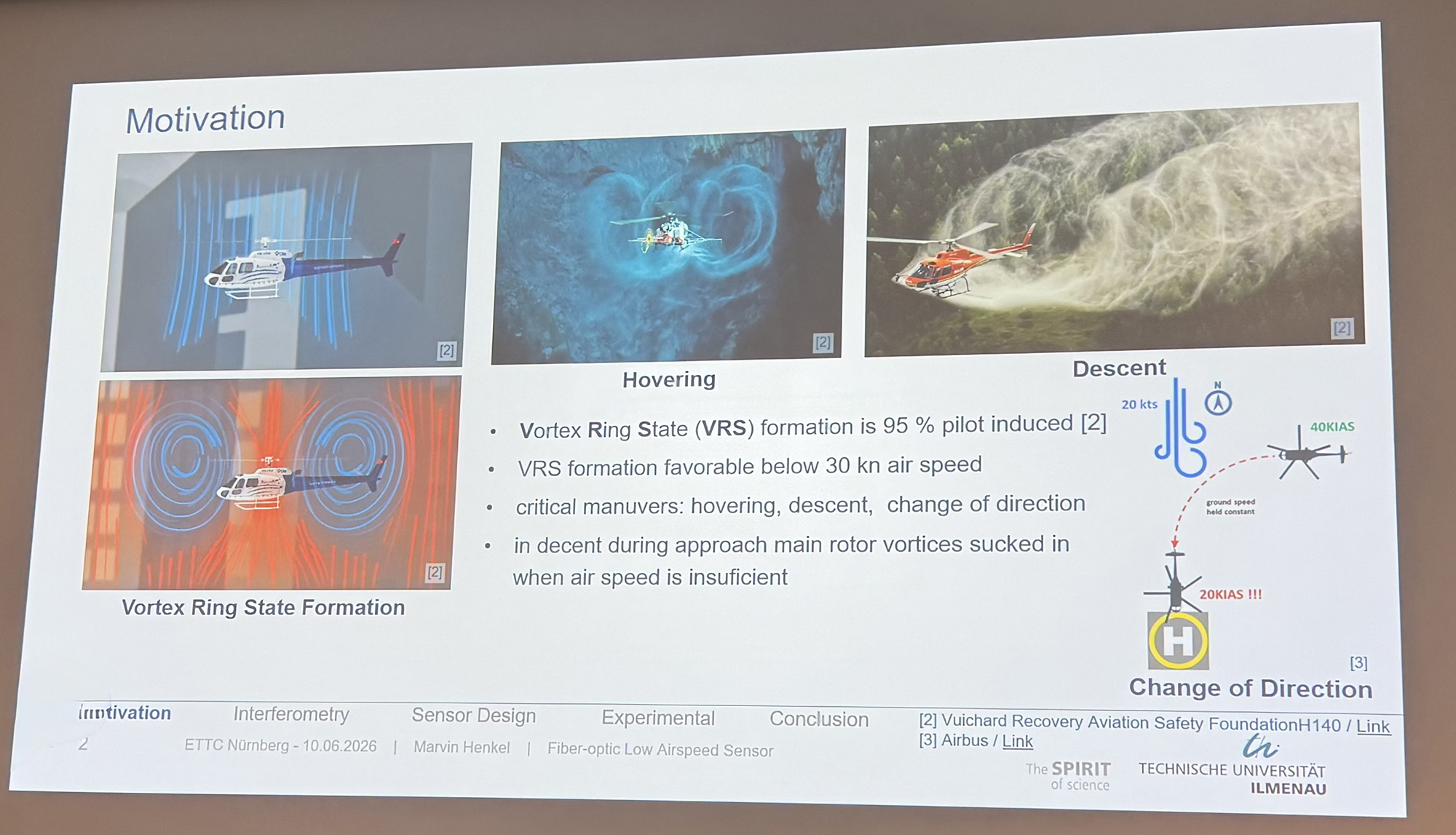
The novel sensor is intended to contribute to the early detection of the dangerous vortex ring state in helicopters. This could improve flight safety and reduce the number of accidents caused by inadequate measurement of airspeed in the low-speed range.