Prof. Dr. Erich Runge
Head of the Institute of Physics
Dagmar Böhme
Phone: +49 (0) 3677 / 69 37 06
Room: Curiebau, room 320
Visiting address: Weimarer Strasse 25, 98693 Ilmenau
How to find us: Directions and site plan

We are delighted to announce that Thomas Hannappel has been recognised by Wiley as a Top Cited Author for 2025 in recognition of his scientific contribution.
His article, entitled
“Integration of Multijunction Absorbers and Catalysts for Efficient Solar-Driven Artificial Leaf Structures: A Physical and Materials Science Perspective”
has been recognised as a highly cited paper in the prestigious journal *Solar RRL*.
This award underscores the great relevance of his research in the field of solar-driven energy conversion and artificial photosynthesis.
Our publication
‘Dangling Bond Defects on Si Surfaces and Their Consequences on Energy Band Diagrams: From a Photoelectrochemical Perspective’
published in *Solar RRL*, has been recognised by Wiley as one of the most viewed articles! The publication investigates how so-called “dangling bonds” (unsaturated bonds) on silicon surfaces create electronic defects that influence the band structure and charge carrier dynamics, thereby altering the efficiency of photoelectrochemical processes such as solar energy conversion or water splitting.
Congratulations to Dominik Moritz for leading this work, and Mohammad Amin Zare Pour is proud to have made a small contribution to this collaboration.
Our PhD student, Sahar Shekarabi, attended the MATSUS Spring 2026 (nanoGe Conference) in Barcelona.
The conference provided an excellent opportunity to exchange ideas with international researchers and to attend numerous high-calibre specialist presentations.
Current research work from the department was also presented during the event. We are particularly delighted to have been awarded the Elsevier-sponsored poster prize.
Mohammad Amin Zare Pour has also completed his PhD with the highest possible distinction, ‘summa cum laude’. His research topic was ‘Interfacial studies on multi-absorber structures for photoelectrochemical solar fuel production’ – congratulations to him too!
Congratulations on the successful dissertation (summa cum laude) of Juliane Koch, with the research topic "Preparation and characterization of III-V semiconductor nanowires for regenerative energy supply". With immediate effect, Dr. Juliane Koch is working as a junior research group leader for the project "SustEnMat -Substitution and recycling strategies for critical elements in highly efficient optoelectronic energy materials" and will therefore remain part of our team.
"DEPECOR - Direct Efficient Photoelectrocatalytic CO2 Reduction" In a solar cell, an absorber structure has the function of converting sunlight into chemical energy. In the "DEPECOR" project, a so-called multi-absorber demonstrator is being developed that is capable of even more: it is to convert CO2 into hydrocarbons by means of artificial photosynthesis - an "artificial leaf". These can be used as energy sources. The reaction is made possible by photoelectrocatalysis, for which direct sunlight is used. The demonstrator, which copies the photosynthesis effect of leaves in nature, could help to reduce climate-damaging CO2 emissions and make CO2 usable as a raw material. In its research, "DEPECOR" is pursuing a systemic approach in which already established, highly efficient solar cells from photovoltaics are combined and adapted for CO2 reduction. The surfaces of the solar cells are specifically modified with anti-corrosion coatings. In addition, suitable catalysts are selected depending on the material and shape.
This two-part documentary provides an overview of existing solutions for the global energy transition and the associated challenges. It shows that the transition to sustainable energy sources must not only be driven forward in laboratories and power plants, but also by those responsible and decision-makers.
Artificial photosynthesis: researchers want to generate energy from leaves! Photosynthesis - the energy of the future? How artificial leaves could even make airplanes climate-friendly. Every leaf is a small factory that tirelessly creates the plant's fuel from water, carbon dioxide and sunlight: glucose.
How can we meet the challenges of the energy transition? What contribution can Thuringia and Technische Universität Ilmenau make to climate protection and sustainable power generation based on renewable energies? And what is the current status of research into direct solar hydrogen production, artificial photosynthesis? Katrin Göring-Eckardt, Vice President of the German Bundestag and Member of Parliament for Thuringia, discussed this yesterday with Vice President for Research and Young Scientists Prof. Stefan Sinzinger, Prof. Thomas Hannappel, Head of Fundamentals of Energy Materials and other scientists from TU Ilmenau.
Physicists are researching ways of replicating the sun on earth to meet the ever-increasing demand for energy. Light also has great symbolic power in the world's religions and is an important part of our language.
Gert Scobel sheds light on these and many other aspects of light with his guests, Prof. Thomas Hannappel, Prof. Jutta Papenbrock and Prof. Manuela Stadlober-Temmer.
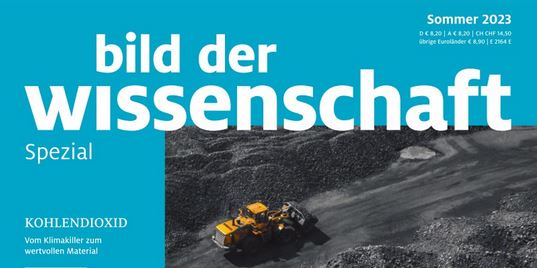
In an international research project involving the TU Ilmenau, scientists have succeeded in developing a sunlight-powered component that converts carbon dioxide directly into usable fuels with an efficiency of over five percent.
Professor Hannappel from Ilmenau University of Technology and his research team have won the Thuringian Research Prize 2022 in the "Basic Research" category. With their research work, the team of scientists made significant progress in the development of semiconductor structures for the efficient use of solar energy to produce green hydrogen - possibly the renewable energy source of the future.